PHARMACIST-REVIEWED GUIDE · PAKISTAN
What Risek (omeprazole) is used for, the best time to take it, 20 mg vs 40 mg, side effects, and what to know about long-term use.
✓ Reviewed by Arhum Nadeem, Pharm-D · ✓ Sources listed · ✓ 3–4 hr delivery in Lahore
Medically reviewed by Arhum Nadeem, Pharm-D (8 years’ experience as a pharmacist) · Last reviewed: October 2026
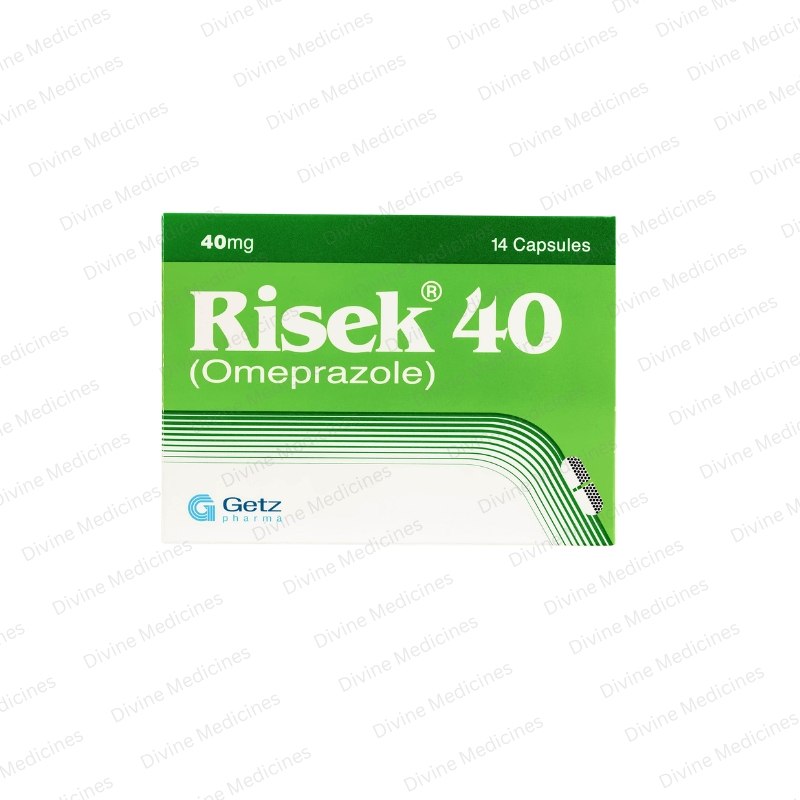
Risek is a widely used brand of omeprazole, a medicine that reduces stomach acid. It is very effective for acidity and ulcers, but it works best when taken at the right time, and long-term use deserves a review with your doctor.
Key points
Omeprazole belongs to a group called proton pump inhibitors (PPIs). It switches off the “pumps” in the stomach lining that make acid. Other PPIs in Pakistan include esomeprazole (for example Nexum) and pantoprazole.
Our guide to acid reflux or stomach ulcer helps you understand which problem you may have.
Risek is available as 20 mg and 40 mg capsules (and as an injection used in hospitals). Doctors often use 20 mg for reflux maintenance and 40 mg for ulcers, severe reflux or H. pylori treatment.
Take Risek 30 to 60 minutes before breakfast, swallowed whole with water. The acid pumps are most active after eating, and omeprazole works best when it is already in your system before your first meal. If you take it twice a day, take the second dose 30 to 60 minutes before your evening meal.
Taking it after food, or at bedtime on an empty stomach that will not be fed, makes it much less effective.
Common: headache, nausea, stomach pain, gas, constipation or loose motions.
These risks are small for most people but are a good reason not to take a PPI longer than needed.
Tell your doctor if you take clopidogrel (a blood thinner used after heart attacks or stents), warfarin, methotrexate, some HIV medicines, or iron tablets. Omeprazole can reduce the effect of clopidogrel.
After several weeks of use, stopping suddenly can cause a short-term rebound of acid. Your doctor may suggest reducing to 20 mg, then taking it every other day, before stopping. Simple antacids can help during this time.
Can I take Risek every day? Yes, when your doctor advises it. Long-term daily use should be reviewed regularly.
Risek or Nexum: which is better? Both are PPIs and work similarly for most people. Your doctor chooses based on your condition, response and cost.
Can I stop Risek suddenly? After long use, acid can rebound for a short time. Reducing gradually helps.
Is Risek safe in pregnancy? Omeprazole is sometimes used in pregnancy when needed, but only on a doctor’s advice.
This guide is for general information and does not replace advice from your doctor. Always follow your doctor’s directions and the medicine’s pack leaflet.

Your trusted destination for medicines and healthcare essentials, with convenient online ordering and doorstep delivery across Lahore.
Welcome Back 👋
Sign in to access your account and continue where you left off.
Welcome To Divine Medicines🚀
Create your account to access everything you need.
 Your cart is empty
 |
 |
 |
Questions & Comments
Have a question about this article? Ask below and our team will reply.
No comments yet. Be the first to ask a question.