
Description
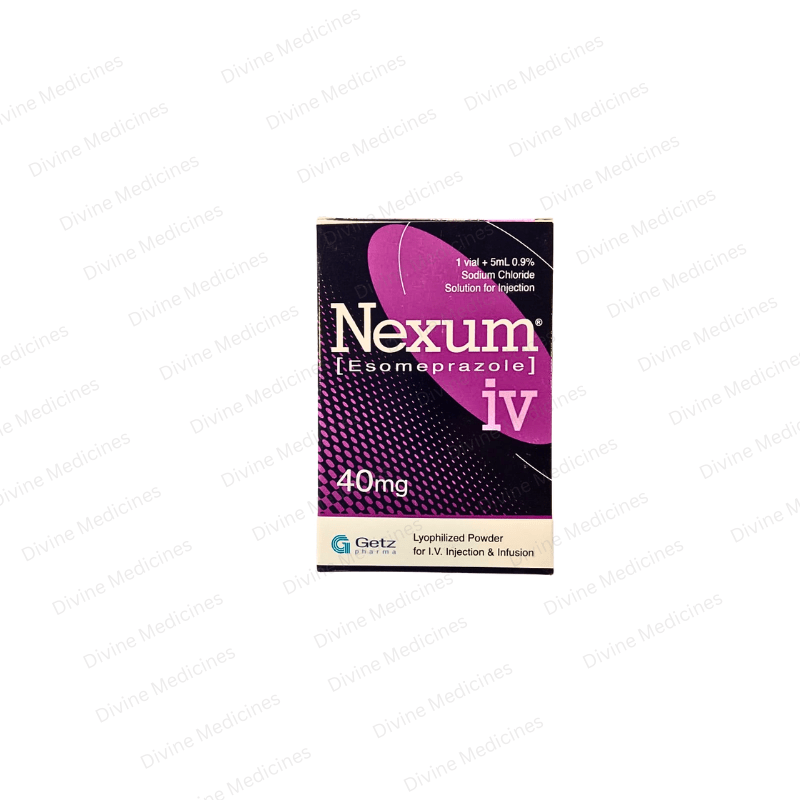
Here’s a complete, original product description for Nexum (40mg) 5ml Injection/Infusion, based on publicly known facts about esomeprazole sodium injections. I’ve written every line myself — nothing is copied from any manufacturer leaflet or website.
Description
Nexum 40mg Injection is a proton pump inhibitor (PPI) formulated as a sterile powder for reconstitution into a solution for intravenous injection or infusion. Its active constituent is esomeprazole sodium, the sodium salt form of esomeprazole, which is the S-isomer of omeprazole. Nexum is intended for patients who require rapid and effective control of stomach acid but who are unable to take oral medication, whether due to surgery, critical illness, unconsciousness, or severe gastrointestinal symptoms. It works by directly targeting the acid-producing pump within the lining of the stomach, offering fast relief from acid-related complications when swallowing tablets or capsules isn’t a practical option. Nexum is typically administered by a qualified healthcare professional in a hospital or clinical setting.
Ingredients
Each vial of Nexum 40mg contains esomeprazole sodium equivalent to 40mg of esomeprazole, along with pharmaceutical-grade buffering and stabilizing agents that help maintain the correct pH and stability of the reconstituted solution. The powder is lyophilized (freeze-dried) to preserve potency until it is mixed with a compatible diluent such as normal saline shortly before administration.
Dosage Form
Nexum is supplied as a lyophilized powder in a single-use glass vial, meant to be reconstituted into a clear solution and delivered either as a slow intravenous injection or as an infusion, depending on the clinical scenario and the treating physician’s instructions.
Uses
Nexum 40mg Injection is generally used for short-term management of conditions where oral PPI therapy is not feasible, including erosive esophagitis, gastroesophageal reflux disease (GERD) symptoms, and prevention of rebleeding following endoscopic treatment of bleeding stomach or duodenal ulcers. It may also be used in hospitalized patients who need acid suppression as part of broader perioperative or critical care management. The exact indication and duration of use should always be determined by the prescribing doctor based on the patient’s condition.
How to Use
Nexum must only be reconstituted and administered by trained medical personnel. The powder is typically dissolved in an appropriate volume of sterile saline solution and given either as a slow push over a few minutes or as an infusion drip lasting between 10 and 30 minutes, depending on the treatment goal. It should never be self-administered at home. Once mixed, the solution should be visually inspected for clarity and used within the timeframe specified by the hospital pharmacy, as reconstituted PPI solutions are not intended for extended storage.
Side Effects
Like all medications, Nexum can cause side effects in some patients, although not everyone experiences them. Commonly reported effects include headache, nausea, abdominal discomfort, diarrhea, or constipation. Less commonly, patients may notice dizziness, dry mouth, or skin rash. Rare but more serious reactions can include injection site irritation, disturbances in liver enzymes, or allergic responses such as swelling and difficulty breathing, which require immediate medical attention. Long-term or high-dose use of PPIs has also been associated with effects on bone health and vitamin B12 or magnesium levels, so ongoing use should be monitored by a physician.
Pregnancy & Breastfeeding
Nexum should only be used during pregnancy or while breastfeeding if a doctor determines that the benefit clearly outweighs any potential risk. There is limited clinical data on esomeprazole’s effects in pregnant or nursing individuals, so this medication should not be assumed safe for self-directed use in these situations. Anyone who is pregnant, planning a pregnancy, or breastfeeding should discuss their full medical history with their doctor before this injection is administered.
Storage Instructions
Unopened vials of Nexum should be stored at room temperature, away from direct sunlight and moisture, and kept out of reach of children. Once reconstituted, the solution should be used promptly and according to the hospital or pharmacy’s specific stability guidelines, as it is not designed for prolonged storage after mixing.
FAQs
Can Nexum be taken orally?
No, this formulation is designed strictly for intravenous use by a healthcare provider.
How quickly does it work?
Many patients notice acid-related symptom relief within a short time after administration, though this varies by individual.
Is a prescription required?
Yes, Nexum is a prescription-only medication administered under medical supervision.
Can it be used long-term?
It is generally intended for short-term hospital or clinical use, with transition to oral therapy once the patient is able.
Disclaimer
Always use this medicine strictly according to your doctor’s instructions and prescribed dosage.




Reviews
There are no reviews yet.