
Description
Description
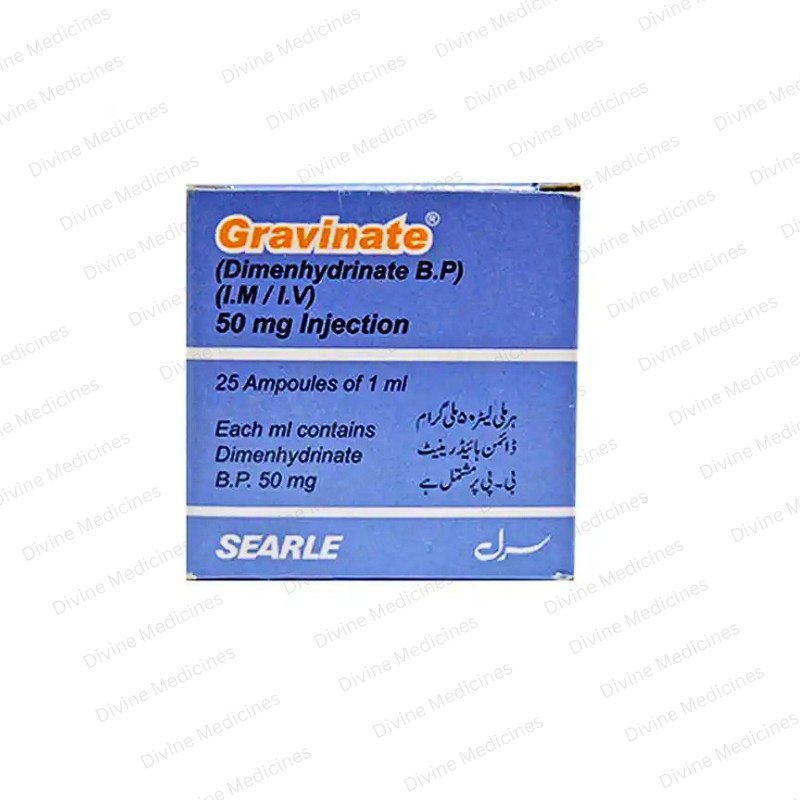
Gravinate 50mg injection is an intravenous or intramuscular formulation of Dimenhydrinate, a medicine belonging to the antihistamine class with recognized antiemetic properties. It is used when the injectable form is more practical than oral tablets, such as in cases of severe vomiting where oral medication cannot be tolerated or retained. Dimenhydrinate works through central anticholinergic effects that help suppress the brain signals responsible for triggering nausea, vomiting, and the sensation of dizziness or imbalance associated with motion sickness. The pack contains 25 ampoules, each holding 1ml of solution, suitable for administration by a healthcare professional as part of a supervised treatment plan.
Ingredients
Each 1ml ampoule of Gravinate injection contains 50mg of Dimenhydrinate BP as its active ingredient. The formulation also includes suitable sterile solvents and stabilizing agents appropriate for intravenous or intramuscular administration. Patients with known sensitivities to Dimenhydrinate or any of the formulation’s components should inform their healthcare provider before administration.
Dosage Form
Gravinate is supplied as an injectable solution in 1ml ampoules, intended for administration by intravenous or intramuscular injection by a trained healthcare professional.
Uses
Gravinate injection is used for the prevention and treatment of nausea, vomiting, and vertigo associated with motion sickness, particularly in situations where oral administration is impractical, such as severe vomiting, postoperative recovery, or when rapid symptom relief is needed. It is also used for the symptomatic treatment of nausea and dizziness linked to other causes affecting the inner ear’s balance mechanisms.
How to Use
Gravinate injection should only be administered by a trained healthcare professional, either intramuscularly or intravenously, based on the patient’s condition and the treating doctor’s assessment. For adults, nausea or vomiting can typically be controlled for approximately four hours with a 50mg dose, and this may be repeated at similar intervals as needed to prevent recurrence. In situations where drowsiness is not a concern or may even be desirable, a higher dose may be administered under medical supervision. The healthcare provider will determine the appropriate dose, frequency, and route of administration based on the individual’s specific needs.
Side Effects
Common side effects of Gravinate injection include drowsiness, dry mouth, and dizziness, similar to those seen with the oral tablet form. Some patients may also experience mild injection site discomfort. Less commonly, more serious effects such as irregular heartbeat or allergic reactions may occur, and these should be reported to the healthcare team immediately. Since the injection may cause a degree of drowsiness, patients should be advised accordingly, particularly if they will be resuming activities that require alertness afterward.
Pregnancy & Breastfeeding
Gravinate injection should only be used during pregnancy if a doctor determines it is necessary, as Dimenhydrinate is known to cross the placenta and reach the developing baby. Small amounts of the medicine are also distributed into breast milk, so its use during breastfeeding should be discussed with a healthcare provider beforehand to weigh the potential benefits and risks.
Storage Instructions
Gravinate ampoules should be stored at room temperature, away from direct sunlight, heat, and moisture, following the specific storage conditions indicated on the packaging. The ampoules should remain in their original packaging until needed and be kept out of the reach of children. Any unused or expired ampoules should be disposed of properly by a healthcare facility rather than through household waste.
FAQs
When is the injectable form of Gravinate used instead of tablets?
It is generally used when oral administration is impractical, such as during severe vomiting or in situations requiring rapid symptom relief.
Who administers Gravinate injection?
It should only be administered by a trained healthcare professional, either intramuscularly or intravenously, based on the patient’s condition.
How long does the effect of a single dose typically last?
Nausea or vomiting may be controlled for approximately four hours with a standard dose, and repeat administration may follow at similar intervals if needed.
Can Gravinate injection cause drowsiness like the tablet form?
Yes, drowsiness is a common effect of Dimenhydrinate regardless of the route of administration, and this should be considered when planning post-injection activities.
Disclaimer
Always use this medicine strictly according to your doctor’s instructions and prescribed dosage.




Reviews
There are no reviews yet.