Description
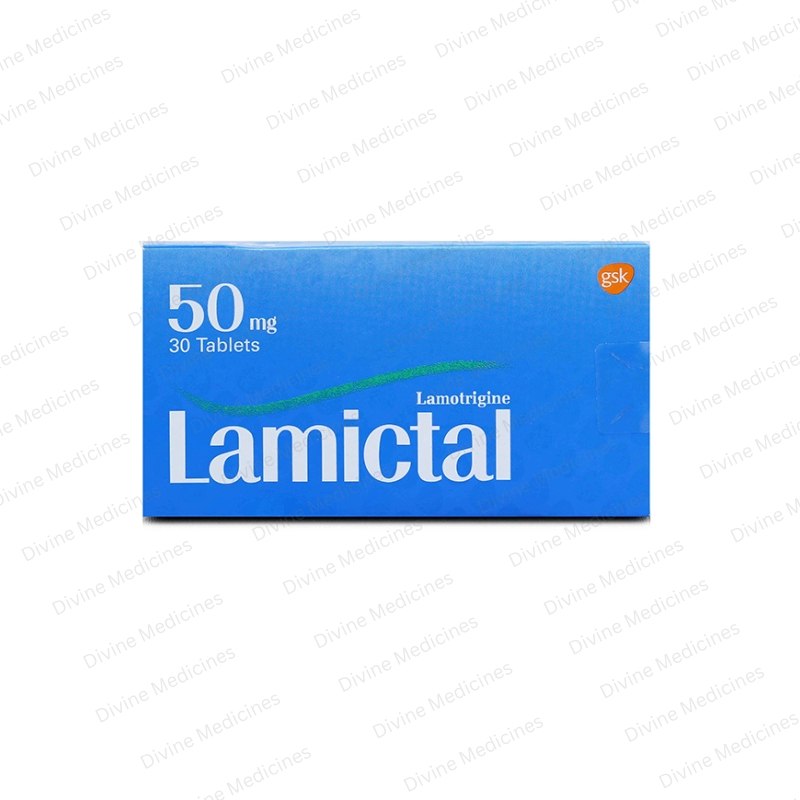
Lamictal 50mg Tablets contain Lamotrigine and are made by GlaxoSmithKline. Lamotrigine stabilises electrical activity in the brain. Doctors prescribe it for several types of epilepsy and for long-term maintenance in bipolar I disorder. The dose must be built up slowly over several weeks. You can order it online from Divine Medicines with home delivery across Lahore.
Quick Facts
- Brand: Lamictal
- Formula (generic): Lamotrigine
- Manufacturer: GlaxoSmithKline
- Drug class: Antiepileptic (anticonvulsant) and mood stabiliser
- Dosage form: Oral tablet
- Pack size: 3 strips of 10 tablets
Ingredients
Each tablet contains Lamotrigine 50 mg.
Drug Class
Antiepileptic (anticonvulsant) and mood stabiliser.
Dosage Form & Pack Size
Oral tablet. Available as a full pack (3 strips of 10 tablets) or as a single strip of 10 tablets.
Uses
Lamictal 50mg is used for:
- Epilepsy – partial and generalised seizures, alone or with other epilepsy medicines
- Seizures linked to Lennox-Gastaut syndrome
- Long-term maintenance therapy in bipolar I disorder, mainly to reduce the risk of depressive episodes
Dosage
Lamotrigine is always started at a low dose and increased slowly over about 5–6 weeks to reduce the risk of a serious rash. A common adult maintenance dose is 100–200 mg per day, and some people with epilepsy need up to 400 mg daily. The schedule is different if you also take valproate, carbamazepine or phenytoin, so follow your doctor’s plan exactly. If you miss more than five days, do not restart at your usual dose; ask your doctor.
How to Use
Swallow the tablet whole with water, with or without food. Take it at the same time each day. Do not stop suddenly, especially if you have epilepsy, because this can trigger seizures.
Missed Dose
Take the missed dose when you remember. If the next dose is due soon, skip the missed one. Do not take a double dose.
Overdose
An overdose can cause unsteadiness, involuntary eye movements, drowsiness, seizures or loss of consciousness. Get emergency medical help immediately.
When Not to Use
- Allergy to lamotrigine or any ingredient
- Previous rash or serious skin reaction caused by lamotrigine
Side Effects
Common side effects may include:
- Headache
- Dizziness and unsteadiness
- Double or blurred vision
- Nausea
- Drowsiness or trouble sleeping
- Mild skin rash
Stop taking it and seek urgent medical help for any rash with fever, blistering, peeling skin, mouth ulcers or swollen glands. These can be signs of a rare but serious skin reaction, most likely in the first 8 weeks.
Precautions & Warnings
- Report any new rash to your doctor straight away
- A small number of people on antiepileptic medicines develop low mood or suicidal thoughts; contact your doctor immediately if this happens
- Hormonal contraceptives can lower lamotrigine levels; tell your doctor if you start or stop them
- Use with caution in liver or kidney disease
Pregnancy & Breastfeeding
Do not stop lamotrigine on your own if you become pregnant; speak to your doctor first. Lamotrigine levels can change during pregnancy, and your doctor may recommend folic acid. It passes into breast milk, so your doctor will advise on breastfeeding.
Drug Interactions
- Valproate roughly doubles lamotrigine levels, so a lower dose is needed
- Carbamazepine, phenytoin, phenobarbital and rifampicin lower lamotrigine levels
- Oestrogen-containing birth control pills lower lamotrigine levels
Storage Instructions
Store below 30°C in a dry place, away from direct sunlight and moisture. Keep in the original pack and out of reach of children.
FAQs
What is the Lamictal 50mg price in Pakistan?
Current prices for a full pack and for a single strip are shown at the top of this page. Order online from Divine Medicines for delivery in Lahore.
Can I buy a single strip of Lamictal 50mg?
Yes. You can choose either a full pack or a single strip.
What is the formula of Lamictal 50mg?
The formula (generic name) of Lamictal 50mg is Lamotrigine.
Who manufactures Lamictal 50mg?
Lamictal 50mg is manufactured by GlaxoSmithKline and is available at Divine Medicines with delivery across Lahore.
Why must Lamictal 50mg be started slowly?
Building up the dose slowly lowers the risk of a serious skin rash.
What should I do if I get a rash on Lamictal 50mg?
Contact your doctor straight away. Seek urgent care if the rash comes with fever, blisters or mouth sores.
Can I stop Lamictal 50mg suddenly?
No. Stopping suddenly can cause seizures. Your doctor will reduce it gradually.
Is Lamictal 50mg used for bipolar disorder?
Yes. Doctors use lamotrigine for long-term maintenance in bipolar I disorder.
Disclaimer
Always use this medicine strictly according to your doctor’s instructions and prescribed dosage.
 Sale!
Sale!
 Sale!
Sale!
 Sale!
Sale!
 Sale!
Sale!
 Sale!
Sale!
 Sale!
Sale!
 Sale!
Sale!
 Sale!
Sale!


 Your cart is empty


Reviews
There are no reviews yet.