Description
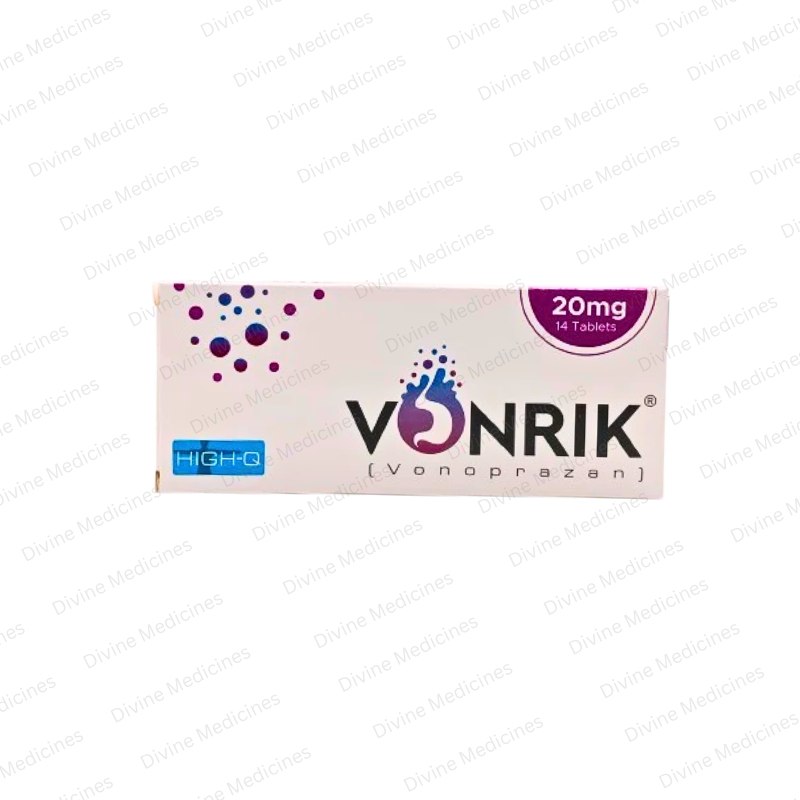
Vonrik 20mg Tablets contain Vonoprazan and are made by High-Q International. Vonoprazan blocks the stomach’s acid pumps directly and works from the first dose, without needing activation by acid. It gives fast and strong acid suppression. You can order it online from Divine Medicines with home delivery across Lahore.
Quick Facts
- Brand: Vonrik
- Formula (generic): Vonoprazan
- Manufacturer: High-Q International
- Drug class: Potassium-competitive acid blocker (P-CAB)
- Dosage form: Oral tablet
- Pack size: 14 tablets
Ingredients
Each tablet contains Vonoprazan 20 mg.
Drug Class
Potassium-competitive acid blocker (P-CAB).
Dosage Form & Pack Size
Oral tablet. Pack of 14 tablets.
Uses
Vonrik 20mg is used for:
- Healing of erosive oesophagitis and relief of heartburn
- Stomach and duodenal ulcers
- Helicobacter pylori infection, in combination with antibiotics
Dosage
Erosive oesophagitis: 20 mg once daily for up to 8 weeks, then 10 mg daily for maintenance. H. pylori: 20 mg twice daily with antibiotics for 7–14 days.
How to Use
Swallow the tablet with water, with or without food, at the same time each day.
Missed Dose
Take the missed dose when you remember. If the next dose is due soon, skip the missed one. Do not take a double dose.
Overdose
If you take too much, contact your doctor or go to the nearest hospital emergency department straight away.
When Not to Use
- Allergy to vonoprazan
- Taking atazanavir or rilpivirine (HIV medicines)
Side Effects
Common side effects may include:
- Diarrhoea
- Constipation
- Nausea
- Stomach discomfort
- Headache
Seek medical help for severe watery diarrhoea or a serious skin reaction.
Precautions & Warnings
- Long-term use can lower magnesium and vitamin B12 levels and may increase fracture risk; use the lowest effective dose
- See a doctor for difficulty swallowing, unexplained weight loss, vomiting blood or black stools
Pregnancy & Breastfeeding
Use in pregnancy only if your doctor decides it is needed. Ask your doctor before breastfeeding.
Drug Interactions
- Atazanavir and rilpivirine must not be combined
- Can reduce absorption of ketoconazole, itraconazole and iron
- Clarithromycin raises vonoprazan levels
Storage Instructions
Store below 30°C in a dry place, away from direct sunlight and moisture. Keep in the original pack and out of reach of children.
FAQs
What is the Vonrik 20mg price in Pakistan?
Current prices are shown at the top of this page. Order online from Divine Medicines for delivery in Lahore.
What is the formula of Vonrik 20mg?
The formula (generic name) of Vonrik 20mg is Vonoprazan.
Who manufactures Vonrik 20mg?
Vonrik 20mg is manufactured by High-Q International and is available at Divine Medicines with delivery across Lahore.
How is Vonrik 20mg different from omeprazole?
It works faster and does not need to be taken before meals.
Can Vonrik 20mg be taken with food?
Yes, with or without food.
Is Vonrik 20mg used for H. pylori?
Yes, with antibiotics.
Disclaimer
Always use this medicine strictly according to your doctor’s instructions and prescribed dosage.
 Sale!
Sale!
 Sale!
Sale!
 Sale!
Sale!
 Sale!
Sale!
 Sale!
Sale!
 Sale!
Sale!
 Sale!
Sale!
 Sale!
Sale!


 Your cart is empty


Reviews
There are no reviews yet.