Description
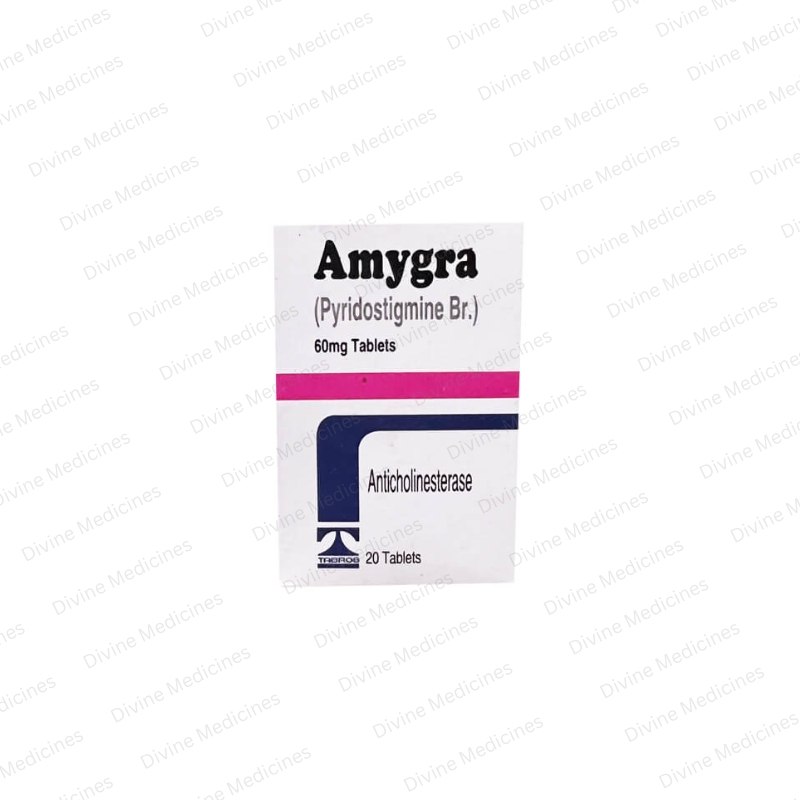
Amygra 60mg Tablets contain Pyridostigmine Bromide and are made by Tabros Pharma. Pyridostigmine blocks the enzyme that breaks down acetylcholine, the chemical messenger between nerves and muscles. More acetylcholine improves muscle strength in myasthenia gravis. You can order it online from Divine Medicines with home delivery across Lahore.
Quick Facts
- Brand: Amygra
- Formula (generic): Pyridostigmine Bromide
- Manufacturer: Tabros Pharma
- Drug class: Cholinesterase inhibitor – for myasthenia gravis
- Dosage form: Oral tablet
- Pack size: 20 tablets
Ingredients
Each tablet contains Pyridostigmine bromide 60 mg.
Drug Class
Cholinesterase inhibitor – for myasthenia gravis.
Dosage Form & Pack Size
Oral tablet. Pack of 20 tablets.
Uses
Amygra 60mg is used for:
- Myasthenia gravis (muscle weakness and fatigue)
- Reversal of certain muscle relaxants, under medical supervision
- Some bowel and bladder muscle weakness, as decided by a doctor
Dosage
Doses are set individually. Adults commonly take 30–120 mg at intervals during the day; the total daily dose is usually 300–1200 mg, adjusted by your doctor.
How to Use
Swallow the tablet with water. Take doses at the times your doctor sets, often 30–60 minutes before meals or activities that need strength.
Missed Dose
Take it as soon as you remember unless the next dose is due soon. Do not double up.
Overdose
Too much can cause severe muscle weakness, sweating, drooling, stomach cramps and breathing difficulty (cholinergic crisis). Seek emergency help.
When Not to Use
- Blockage of the bowel or urinary tract
- Allergy to pyridostigmine or bromides
Side Effects
Common side effects may include:
- Stomach cramps or diarrhoea
- Increased saliva or sweating
- Nausea
- Muscle twitching
Seek urgent help for difficulty breathing or swallowing, or sudden marked weakness.
Precautions & Warnings
- Use with care in asthma, heart rhythm problems, epilepsy, Parkinson’s disease and stomach ulcers
- Do not change the dose without your doctor
- Tell any doctor or dentist you take it before anaesthesia
Pregnancy & Breastfeeding
Use in pregnancy and breastfeeding only under specialist supervision.
Drug Interactions
- Some antibiotics (aminoglycosides), quinine and beta-blockers can weaken its effect or worsen myasthenia
- Anticholinergic medicines (atropine, hyoscine) oppose its effect
- Some muscle relaxants used in surgery
Storage Instructions
Store below 30°C in a dry place, away from direct sunlight and moisture. Keep in the original pack and out of reach of children.
FAQs
What is the Amygra 60mg price in Pakistan?
Current prices are shown at the top of this page. Order online from Divine Medicines for delivery in Lahore.
What is the formula of Amygra 60mg?
The formula (generic name) of Amygra 60mg is Pyridostigmine Bromide.
Who manufactures Amygra 60mg?
Amygra 60mg is manufactured by Tabros Pharma and is available at Divine Medicines with delivery across Lahore.
What is Amygra 60mg used for?
Mainly for myasthenia gravis.
When should I take Amygra 60mg?
At the times your doctor sets, often before meals.
Can I adjust my Amygra 60mg dose?
No – only your doctor should change it.
What are signs of too much Amygra 60mg?
Cramps, sweating, drooling and worsening weakness.
Disclaimer
Always use this medicine strictly according to your doctor’s instructions and prescribed dosage.
 Sale!
Sale!
 Sale!
Sale!
 Sale!
Sale!
 Sale!
Sale!
 Sale!
Sale!
 Sale!
Sale!
 Sale!
Sale!
 Sale!
Sale!


 Your cart is empty


Reviews
There are no reviews yet.