Description
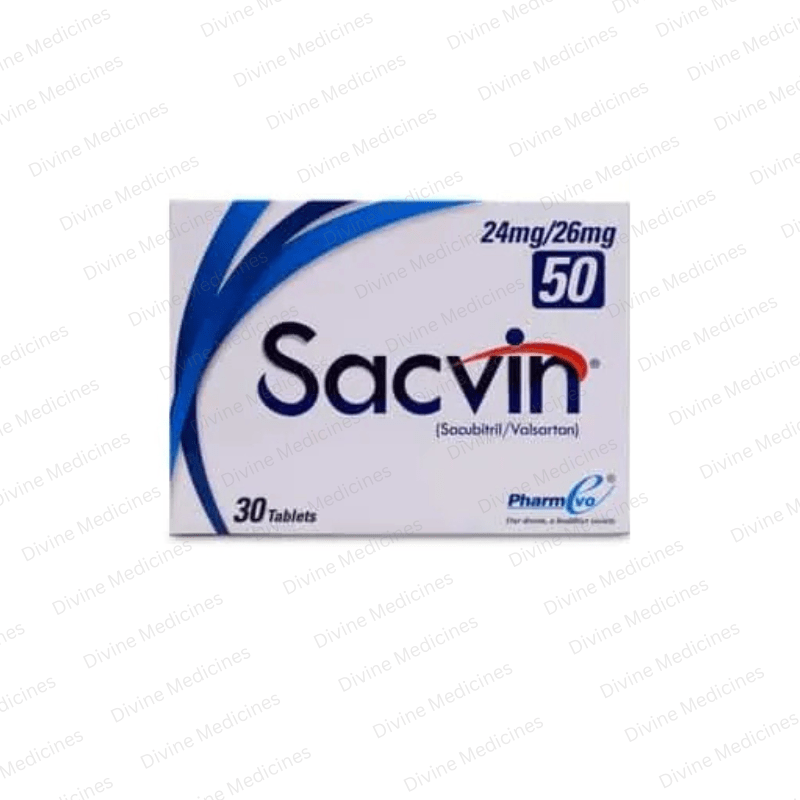
Sacvin 24/26mg Tablets contain Sacubitril + Valsartan and are made by PharmaEvo. Sacubitril blocks the breakdown of natural heart-protective proteins, while valsartan relaxes blood vessels. Together they ease the workload on a weakened heart, reduce hospital admissions and help people with heart failure live longer. You can order it online from Divine Medicines with home delivery across Lahore.
Quick Facts
- Brand: Sacvin
- Formula (generic): Sacubitril + Valsartan
- Manufacturer: PharmaEvo
- Drug class: Angiotensin receptor–neprilysin inhibitor (ARNI) – heart failure medicine
- Dosage form: Oral tablet
- Pack size: 3 strips of 10 tablets
Ingredients
Each tablet contains Sacubitril 24 mg and Valsartan 26 mg.
Drug Class
Angiotensin receptor–neprilysin inhibitor (ARNI) – heart failure medicine.
Dosage Form & Pack Size
Oral tablet. Available as a full pack (3 strips of 10 tablets) or as a single strip of 10 tablets.
Uses
Sacvin 24/26mg is used for:
- Chronic heart failure with reduced ejection fraction (weak heart pumping), in adults
- Heart failure in children aged 1 year and above, under specialist care
Dosage
The usual adult starting dose is 49/51 mg twice daily (or 24/26 mg twice daily in some patients), doubled every 2–4 weeks to the target dose of 97/103 mg twice daily as tolerated.
How to Use
Swallow the tablet with water, twice a day, with or without food. Stop any ACE inhibitor (e.g. enalapril) at least 36 hours before the first dose.
Missed Dose
Take the missed dose when you remember. If the next dose is due soon, skip the missed one. Do not take a double dose.
Overdose
If you take too much, contact your doctor or go to the nearest hospital emergency department straight away.
When Not to Use
- Taking an ACE inhibitor now or within the last 36 hours
- History of angioedema (swelling of the face, lips or throat)
- Pregnancy
- Severe liver disease
- Use with aliskiren in diabetes
Side Effects
Common side effects may include:
- Low blood pressure and dizziness
- Raised potassium
- Reduced kidney function
- Cough
- Tiredness
Seek urgent help for swelling of the face, lips, tongue or throat, or fainting.
Precautions & Warnings
- Your doctor will check blood pressure, kidney function and potassium regularly
- Rise slowly from sitting or lying to avoid dizziness
- Do not stop without speaking to your doctor
Pregnancy & Breastfeeding
Must not be used during pregnancy, as it can harm the unborn baby, especially in the second and third trimesters. Tell your doctor straight away if you become pregnant. It is not recommended during breastfeeding.
Drug Interactions
- ACE inhibitors must not be combined (risk of angioedema)
- Potassium supplements and potassium-sparing diuretics can raise potassium
- NSAID painkillers can affect the kidneys
- Lithium levels may rise
- Statins such as atorvastatin may need monitoring
Storage Instructions
Store below 30°C in a dry place, away from direct sunlight and moisture. Keep in the original pack and out of reach of children.
FAQs
What is the Sacvin 24/26mg price in Pakistan?
Current prices for a full pack and for a single strip are shown at the top of this page. Order online from Divine Medicines for delivery in Lahore.
Can I buy a single strip of Sacvin 24/26mg?
Yes. You can choose either a full pack or a single strip.
What is the formula of Sacvin 24/26mg?
The formula (generic name) of Sacvin 24/26mg is Sacubitril + Valsartan.
Who manufactures Sacvin 24/26mg?
Sacvin 24/26mg is manufactured by PharmaEvo and is available at Divine Medicines with delivery across Lahore.
Is Sacvin 24/26mg used for high blood pressure?
It is mainly used for heart failure with a weak heart pump, under a doctor’s care.
Can I take Sacvin 24/26mg with enalapril?
No. Stop the ACE inhibitor at least 36 hours before starting Sacvin 24/26mg.
How long do I need to take Sacvin 24/26mg?
Usually long term, as heart failure needs ongoing treatment.
Disclaimer
Always use this medicine strictly according to your doctor’s instructions and prescribed dosage.
 Sale!
Sale!
 Sale!
Sale!
 Sale!
Sale!
 Sale!
Sale!
 Sale!
Sale!
 Sale!
Sale!
 Sale!
Sale!
 Sale!
Sale!


 Your cart is empty


Reviews
There are no reviews yet.