PHARMACIST-REVIEWED GUIDE · PAKISTAN
What Augmentin treats, the difference between 375, 625 and 1 g, how to take it with food, side effects, and why it does not work for colds and flu.
✓ Reviewed by Arhum Nadeem, Pharm-D · ✓ Sources listed · ✓ 3–4 hr delivery in Lahore
Medically reviewed by Arhum Nadeem, Pharm-D (8 years’ experience as a pharmacist) · Last reviewed: October 2026
Augmentin is one of the most prescribed antibiotics in Pakistan. It is effective for many bacterial infections, but it is also one of the most overused. This guide explains what it treats, how to take it properly and what to watch for.
Key points
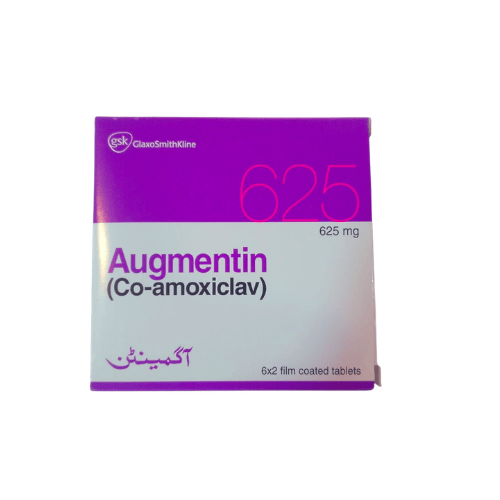
Augmentin combines two medicines:
The generic name is co-amoxiclav. Several other brands in Pakistan contain the same combination.
| Strength | Amoxicillin | Clavulanic acid |
|---|---|---|
| Augmentin 375 mg | 250 mg | 125 mg |
| Augmentin 625 mg | 500 mg | 125 mg |
| Augmentin 1 g | 875 mg | 125 mg |
| Syrups for children (several strengths) | Dosed by weight |
Doctors prescribe Augmentin for bacterial infections such as:
Augmentin does not work against viruses. Colds, flu, most sore throats and most coughs are viral and will not get better faster with antibiotics. Taking antibiotics when you do not need them causes side effects and helps bacteria become resistant, which is a serious and growing problem in Pakistan.
Common: loose motions, nausea, stomach upset, vaginal thrush, mild rash.
Get medical help if you notice:
Interactions: tell your doctor if you take blood thinners (warfarin), methotrexate or allopurinol. Augmentin may make the contraceptive pill less effective if it causes vomiting or diarrhoea.
Pregnancy and breastfeeding: often used when needed, but only on a doctor’s advice.
Antacids do not significantly affect Augmentin, but some other antibiotics are affected; see antibiotics and antacids. Probiotics or yoghurt may help reduce loose motions for some people; take them a few hours apart from the antibiotic.
Should Augmentin be taken before or after food? At the start of a meal. This reduces stomach upset and helps absorption.
Can Augmentin cause loose motions? Yes, it is the most common side effect. Drink fluids. If diarrhoea is severe, bloody or lasts after the course, see a doctor.
Can I take it if I am allergic to penicillin? No. Augmentin contains amoxicillin, a penicillin. Tell your doctor about the allergy so they can choose another antibiotic.
Can I drink tea or milk with it? Yes, normal food and drinks are fine.
This guide is for general information and does not replace advice from your doctor. Always follow your doctor’s directions and the medicine’s pack leaflet.

Your trusted destination for medicines and healthcare essentials, with convenient online ordering and doorstep delivery across Lahore.
Welcome Back 👋
Sign in to access your account and continue where you left off.
Welcome To Divine Medicines🚀
Create your account to access everything you need.
 Your cart is empty
 |
 |
 |

Questions & Comments
Have a question about this article? Ask below and our team will reply.
No comments yet. Be the first to ask a question.