Description
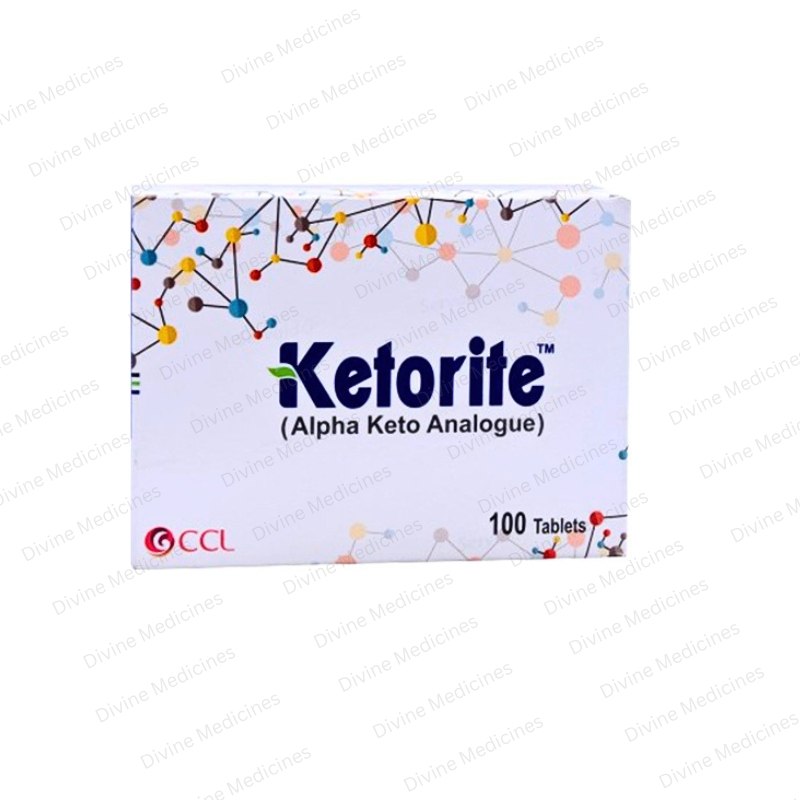
Ketorite Tablets contain Keto-analogues of Essential Amino Acids and are made by CCL Pharmaceuticals. Keto-analogues provide the building blocks of essential amino acids without adding nitrogen. Combined with a low-protein diet, they help maintain nutrition while reducing the workload on weakened kidneys. You can order it online from Divine Medicines with home delivery across Lahore.
Quick Facts
- Brand: Ketorite
- Formula (generic): Keto-analogues of Essential Amino Acids
- Manufacturer: CCL Pharmaceuticals
- Drug class: Nutritional therapy for chronic kidney disease – keto-analogues of essential amino acids
- Dosage form: Oral tablet
- Pack size: 10 strips of 10 tablets
Ingredients
Each tablet contains keto-analogues and hydroxy-analogues of essential amino acids with essential amino acids. The full composition is printed on the pack.
Drug Class
Nutritional therapy for chronic kidney disease – keto-analogues of essential amino acids.
Dosage Form & Pack Size
Oral tablet. Available as a full pack (10 strips of 10 tablets) or as a single strip of 10 tablets.
Uses
Ketorite is used for:
- Chronic kidney disease, together with a low-protein diet, to delay the need for dialysis
- Supporting nutrition in kidney disease
Dosage
The usual adult dose is 4–8 tablets three times daily with meals (about 1 tablet per 5 kg body weight daily), as directed by your nephrologist.
How to Use
Swallow the tablets whole with meals.
Missed Dose
Take the missed dose when you remember. If the next dose is due soon, skip the missed one. Do not take a double dose.
Overdose
If you take too much, contact your doctor or go to the nearest hospital emergency department straight away.
When Not to Use
- High calcium levels
- Disorders of amino acid metabolism
Side Effects
Common side effects may include:
- High calcium levels (with long-term use)
- Stomach upset
Precautions & Warnings
- Calcium levels should be checked regularly
- Must be combined with the low-protein diet advised by your doctor or dietitian
Pregnancy & Breastfeeding
Use in pregnancy or breastfeeding only on a doctor’s advice.
Drug Interactions
- Keep 2 hours apart from tetracycline and quinolone antibiotics, and iron
- Calcium-containing medicines add to calcium levels
Storage Instructions
Store below 30°C in a dry place, away from direct sunlight and moisture. Keep in the original pack and out of reach of children.
FAQs
What is the Ketorite price in Pakistan?
Current prices for a full pack and for a single strip are shown at the top of this page. Order online from Divine Medicines for delivery in Lahore.
Can I buy a single strip of Ketorite?
Yes. You can choose either a full pack or a single strip.
What is the formula of Ketorite?
The formula (generic name) of Ketorite is Keto-analogues of Essential Amino Acids.
Who manufactures Ketorite?
Ketorite is manufactured by CCL Pharmaceuticals and is available at Divine Medicines with delivery across Lahore.
Why take Ketorite with a low-protein diet?
To maintain nutrition while protecting the kidneys.
When should I take Ketorite?
With meals, three times a day.
Do I need blood tests on Ketorite?
Yes, calcium levels should be checked.
Disclaimer
Always use this medicine strictly according to your doctor’s instructions and prescribed dosage.
 Sale!
Sale!
 Sale!
Sale!
 Sale!
Sale!
 Sale!
Sale!
 Sale!
Sale!
 Sale!
Sale!
 Sale!
Sale!
 Sale!
Sale!


 Your cart is empty


Reviews
There are no reviews yet.