Description
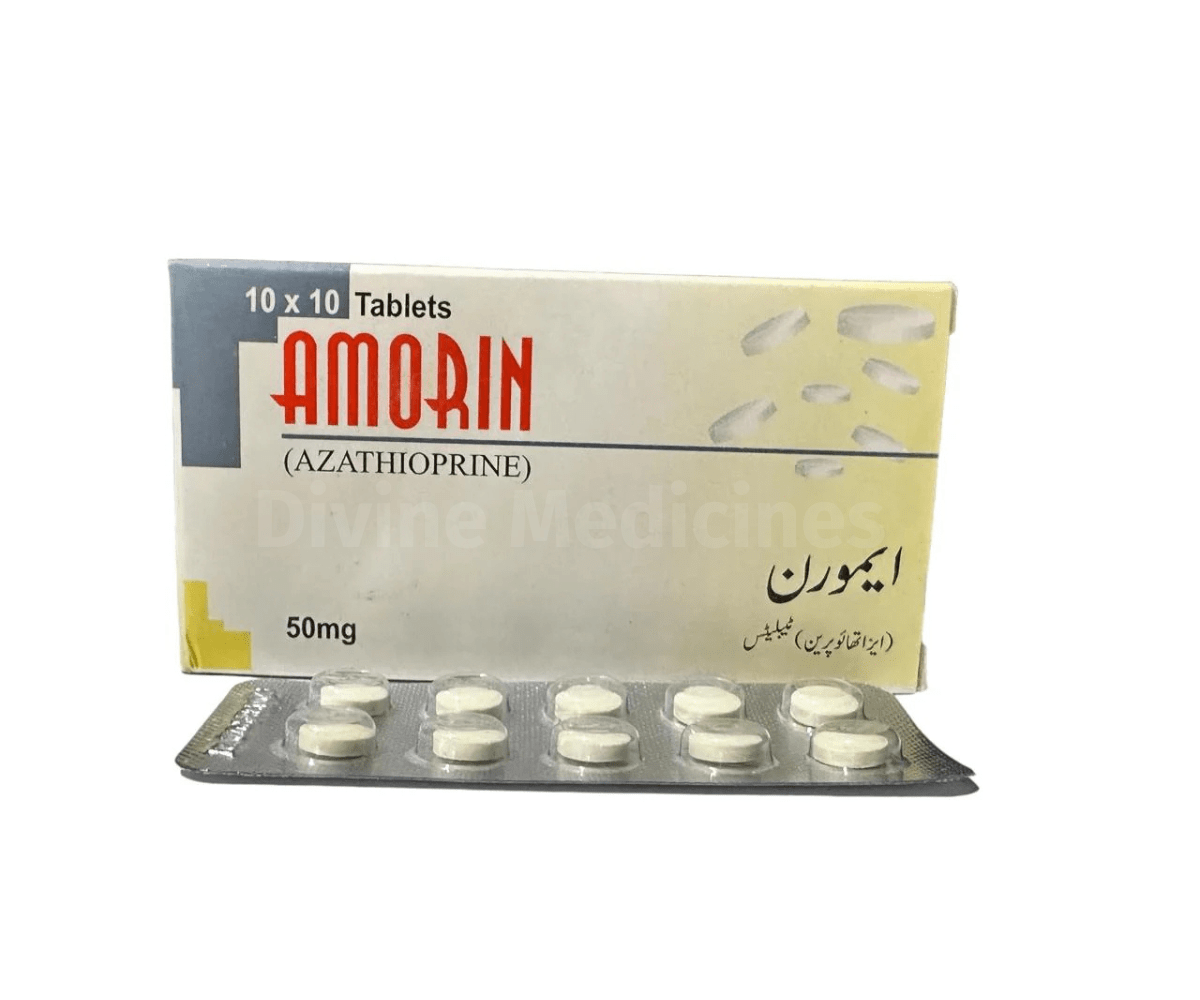
Amorin 50mg Tablets contain Azathioprine and are made by Mass Pharma. Azathioprine reduces the activity of the immune system by slowing the production of immune cells. It is used to calm autoimmune diseases and to stop the body rejecting a transplanted organ. You can order it online from Divine Medicines with home delivery across Lahore.
Quick Facts
- Brand: Amorin
- Formula (generic): Azathioprine
- Manufacturer: Mass Pharma
- Drug class: Immunosuppressant – antimetabolite
- Dosage form: Oral tablet
- Pack size: 10 strips of 10 tablets
Ingredients
Each tablet contains Azathioprine 50 mg.
Drug Class
Immunosuppressant – antimetabolite.
Dosage Form & Pack Size
Oral tablet. Available as a full pack (10 strips of 10 tablets) or as a single strip of 10 tablets.
Uses
Amorin 50mg is used for:
- Lowering the risk of rejection after organ transplant
- Autoimmune conditions such as rheumatoid arthritis, lupus and autoimmune hepatitis
- Inflammatory bowel disease (Crohn’s disease, ulcerative colitis)
- Severe skin and blood conditions, as decided by a specialist
Dosage
Usually 1–3 mg per kg body weight daily, adjusted by the specialist according to response and blood counts. Lower doses are used in kidney or liver disease.
How to Use
Swallow the tablet with water after food to reduce nausea, at the same time each day. Do not crush or break the tablets; wash hands after handling.
Missed Dose
Take the missed dose when you remember. If the next dose is due soon, skip the missed one. Do not take a double dose.
Overdose
An overdose can lower blood counts and cause infections or bleeding. Seek medical help.
When Not to Use
- Allergy to azathioprine or mercaptopurine
- Pregnancy, unless a specialist decides otherwise
- Recent live vaccines
Side Effects
Common side effects may include:
- Nausea or loss of appetite
- Increased risk of infections
- Hair thinning
- Tiredness
Seek urgent help for fever, sore throat, unusual bruising or bleeding, yellow skin, or severe stomach pain.
Precautions & Warnings
- Regular blood tests are essential, especially in the first months
- A TPMT blood test may be done before starting
- Protect skin from the sun – long-term use increases skin cancer risk
- Avoid live vaccines
Pregnancy & Breastfeeding
Use in pregnancy only under specialist care. Ask your specialist about breastfeeding.
Drug Interactions
- Allopurinol and febuxostat: greatly increase toxicity – dose must be cut or avoided
- Warfarin: effect reduced
- Co-trimoxazole and ACE inhibitors: higher risk of low blood counts
- Live vaccines: avoid
Storage Instructions
Store below 30°C in a dry place, away from direct sunlight and moisture. Keep in the original pack and out of reach of children.
FAQs
What is the Amorin 50mg price in Pakistan?
Current prices for a full pack and for a single strip are shown at the top of this page. Order online from Divine Medicines for delivery in Lahore.
Can I buy a single strip of Amorin 50mg?
Yes. You can choose either a full pack or a single strip.
What is the formula of Amorin 50mg?
The formula (generic name) of Amorin 50mg is Azathioprine.
Who manufactures Amorin 50mg?
Amorin 50mg is manufactured by Mass Pharma and is available at Divine Medicines with delivery across Lahore.
Why are blood tests needed with Amorin 50mg?
To check blood counts and liver function.
Can I take Amorin 50mg with allopurinol?
Only with a large dose reduction under specialist care.
How long does Amorin 50mg take to work?
Often several weeks to months.
Can I have vaccines on Amorin 50mg?
Avoid live vaccines.
Disclaimer
Always use this medicine strictly according to your doctor’s instructions and prescribed dosage.
 Sale!
Sale!
 Sale!
Sale!
 Sale!
Sale!
 Sale!
Sale!
 Sale!
Sale!
 Sale!
Sale!
 Sale!
Sale!
 Sale!
Sale!


 Your cart is empty


Reviews
There are no reviews yet.