Description
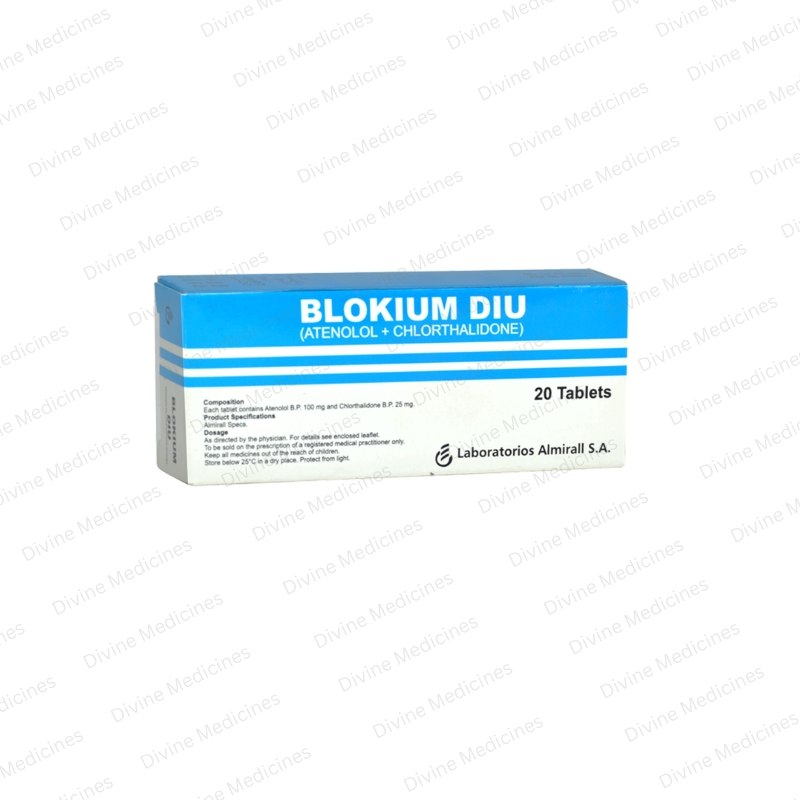
Blokium Diu 100/25mg Tablets contain Atenolol + Chlorthalidone and are made by Highnoon Laboratories. Atenolol slows the heart and lowers blood pressure, while chlorthalidone is a diuretic (water pill) that removes extra salt and water. Together they control blood pressure better than either alone. You can order it online from Divine Medicines with home delivery across Lahore.
Quick Facts
- Brand: Blokium Diu
- Formula (generic): Atenolol + Chlorthalidone
- Manufacturer: Highnoon Laboratories
- Drug class: Beta blocker + diuretic – antihypertensive
- Dosage form: Oral tablet
- Pack size: 2 strips of 10 tablets
Ingredients
Each tablet contains Atenolol 100 mg and Chlorthalidone 25 mg.
Drug Class
Beta blocker + diuretic – antihypertensive.
Dosage Form & Pack Size
Oral tablet. Available as a full pack (2 strips of 10 tablets) or as a single strip of 10 tablets.
Uses
Blokium Diu 100/25mg is used for:
- High blood pressure not controlled by one medicine alone
Dosage
The usual dose is one tablet once daily in the morning. Your doctor chooses the strength based on your blood pressure.
How to Use
Swallow the tablet with water at the same time each day, with or without food. Do not stop suddenly.
Missed Dose
Take the missed dose when you remember. If the next dose is due soon, skip the missed one. Do not take a double dose.
Overdose
If you take too much, contact your doctor or go to the nearest hospital emergency department straight away.
When Not to Use
- Allergy to atenolol
- Very slow heart rate or certain types of heart block
- Uncontrolled heart failure or shock
- Severe asthma
- Severe circulation problems in the legs
- Untreated phaeochromocytoma
- Severe kidney disease
- Low potassium or sodium, or gout that does not improve
Side Effects
Common side effects may include:
- Tiredness
- Cold hands and feet
- Slow heart rate
- Dizziness
- Stomach upset
- Frequent urination
- Low potassium
- Raised blood sugar or uric acid
Seek urgent help for fainting, a very slow heartbeat, wheezing or breathlessness, or swelling of the legs.
Precautions & Warnings
- Do not stop suddenly; this can worsen angina
- It can hide signs of low blood sugar in diabetes
- Tell your doctor about asthma, kidney disease or thyroid problems
- Your doctor may check potassium, sodium and kidney function
Pregnancy & Breastfeeding
Use in pregnancy or breastfeeding only if your doctor decides it is clearly needed.
Drug Interactions
- Verapamil and diltiazem can cause a very slow heart rate
- Other blood pressure medicines add to its effect
- Insulin and diabetes tablets: signs of low sugar may be masked
- NSAIDs may reduce its effect
- Lithium levels can rise
- Digoxin side effects increase if potassium falls
Storage Instructions
Store below 30°C in a dry place, away from direct sunlight and moisture. Keep in the original pack and out of reach of children.
FAQs
What is the Blokium Diu 100/25mg price in Pakistan?
Current prices for a full pack and for a single strip are shown at the top of this page. Order online from Divine Medicines for delivery in Lahore.
Can I buy a single strip of Blokium Diu 100/25mg?
Yes. You can choose either a full pack or a single strip.
What is the formula of Blokium Diu 100/25mg?
The formula (generic name) of Blokium Diu 100/25mg is Atenolol + Chlorthalidone.
Who manufactures Blokium Diu 100/25mg?
Blokium Diu 100/25mg is manufactured by Highnoon Laboratories and is available at Divine Medicines with delivery across Lahore.
Why does Blokium Diu 100/25mg make me pass more urine?
Chlorthalidone is a water pill; take it in the morning.
Can I stop Blokium Diu 100/25mg suddenly?
No. Your doctor will reduce it slowly.
How often is Blokium Diu 100/25mg taken?
Once a day.
Disclaimer
Always use this medicine strictly according to your doctor’s instructions and prescribed dosage.
 Sale!
Sale!
 Sale!
Sale!
 Sale!
Sale!
 Sale!
Sale!
 Sale!
Sale!
 Sale!
Sale!
 Sale!
Sale!
 Sale!
Sale!


 Your cart is empty


Reviews
There are no reviews yet.