Description
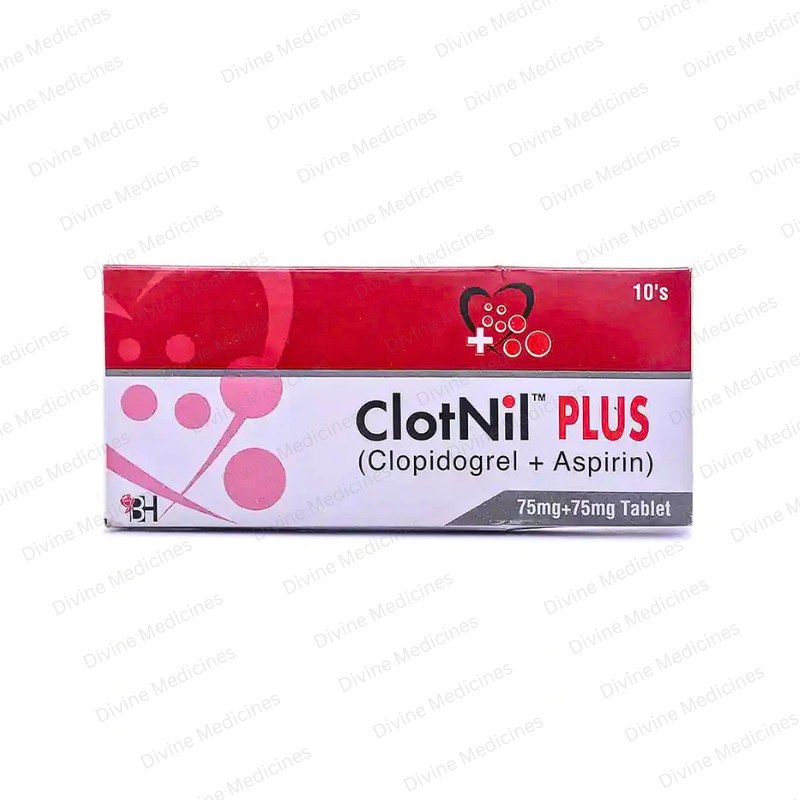
Clotnil Plus 75/75mg Tablets contain Clopidogrel + Aspirin and are made by Barrett Hodgson. Clopidogrel and low-dose aspirin block platelets in two different ways. Together they strongly reduce clot formation after heart attacks and stent placement. You can order it online from Divine Medicines with home delivery across Lahore.
Quick Facts
- Brand: Clotnil Plus
- Formula (generic): Clopidogrel + Aspirin
- Manufacturer: Barrett Hodgson
- Drug class: Dual antiplatelet combination
- Dosage form: Oral tablet
- Pack size: 10 tablets
Ingredients
Each tablet contains Clopidogrel 75 mg and Aspirin 75 mg.
Drug Class
Dual antiplatelet combination.
Dosage Form & Pack Size
Oral tablet. Pack of 10 tablets.
Uses
Clotnil Plus 75/75mg is used for:
- Acute coronary syndrome
- After coronary stent placement
- Continuing dual antiplatelet therapy as directed by a cardiologist
Dosage
The usual dose is one tablet (75/75 mg) once daily.
How to Use
Swallow the tablet with water once a day, with or without food.
Missed Dose
Take the missed dose when you remember. If the next dose is due soon, skip the missed one. Do not take a double dose.
Overdose
An overdose increases bleeding risk. Seek emergency medical help.
When Not to Use
- Active bleeding such as a stomach ulcer or bleeding in the brain
- Severe liver disease
- Allergy to clopidogrel
- Asthma or allergy triggered by aspirin or NSAIDs
- Children under 16 (aspirin)
Side Effects
Common side effects may include:
- Bruising
- Nosebleeds
- Stomach pain or indigestion
- Diarrhoea
- Heartburn
Seek urgent help for black stools, vomiting blood, blood in urine, a severe headache or unexplained bleeding.
Precautions & Warnings
- Do not stop without your doctor’s advice, especially after a stent, as clot risk rises
- Tell your doctor and dentist before any surgery or procedure
- Report unusual bleeding
Pregnancy & Breastfeeding
Use in pregnancy or breastfeeding only if your doctor decides it is needed.
Drug Interactions
- Omeprazole and esomeprazole can reduce its effect; pantoprazole is preferred
- NSAIDs, warfarin and SSRIs increase bleeding risk
- Repaglinide levels increase
Storage Instructions
Store below 30°C in a dry place, away from direct sunlight and moisture. Keep in the original pack and out of reach of children.
FAQs
What is the Clotnil Plus 75/75mg price in Pakistan?
Current prices are shown at the top of this page. Order online from Divine Medicines for delivery in Lahore.
What is the formula of Clotnil Plus 75/75mg?
The formula (generic name) of Clotnil Plus 75/75mg is Clopidogrel + Aspirin.
Who manufactures Clotnil Plus 75/75mg?
Clotnil Plus 75/75mg is manufactured by Barrett Hodgson and is available at Divine Medicines with delivery across Lahore.
Can I stop Clotnil Plus 75/75mg after a stent?
Never stop without your cardiologist’s advice.
Can I take omeprazole with Clotnil Plus 75/75mg?
Pantoprazole is usually preferred; ask your doctor.
Does Clotnil Plus 75/75mg cause bruising?
Easy bruising is common.
Disclaimer
Always use this medicine strictly according to your doctor’s instructions and prescribed dosage.
 Sale!
Sale!
 Sale!
Sale!
 Sale!
Sale!
 Sale!
Sale!
 Sale!
Sale!
 Sale!
Sale!
 Sale!
Sale!
 Sale!
Sale!


 Your cart is empty


Reviews
There are no reviews yet.