Description
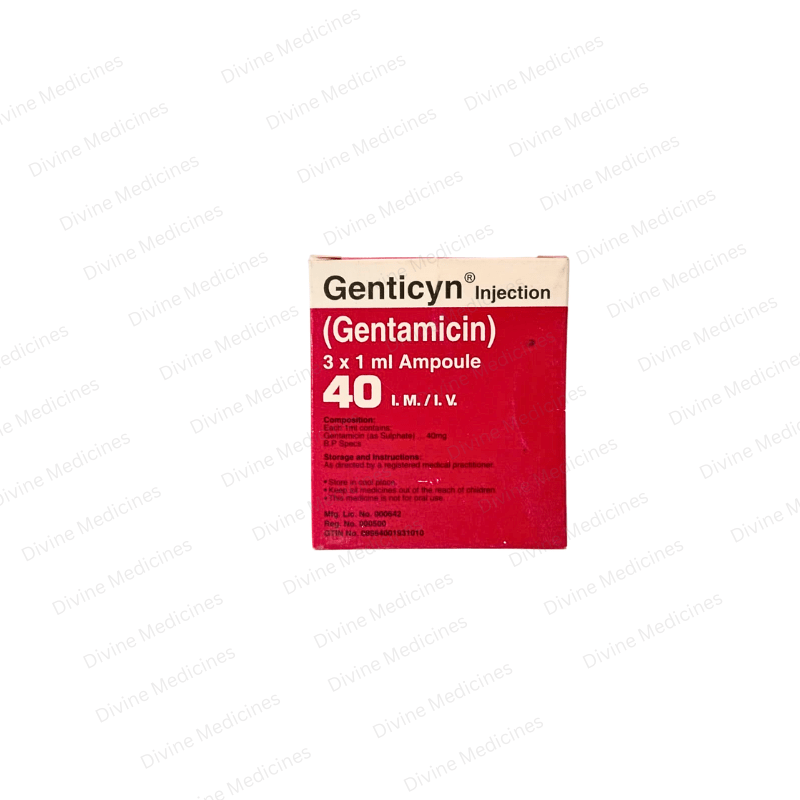
Genticyn 40mg Injection contains Gentamicin Sulphate and is made by RAY Pharma. Gentamicin kills many bacteria by stopping them from making proteins. It is given by injection in hospital for serious infections, often with other antibiotics. You can order it online from Divine Medicines with home delivery across Lahore.
Quick Facts
- Brand: Genticyn
- Formula (generic): Gentamicin Sulphate
- Manufacturer: RAY Pharma
- Drug class: Antibiotic – aminoglycoside (injection)
- Dosage form: Solution for injection (ampoule)
- Pack size: 3 ampoules
Ingredients
Each 1 ml ampoule contains Gentamicin (as sulphate) 40 mg.
Drug Class
Antibiotic – aminoglycoside (injection).
Dosage Form & Pack Size
Solution for injection (ampoule). Available as a full box of 3 ampoules or as a single ampoule.
Uses
Genticyn 40mg is used for:
- Serious bacterial infections such as sepsis, kidney and urinary infections
- Chest and abdominal infections, with other antibiotics
- Infections in newborns, as decided by doctors
Dosage
The dose is calculated by body weight and kidney function, usually given once daily or in divided doses, with blood levels checked.
How to Use
Given by a doctor or nurse into a muscle or a vein.
Missed Dose
This injection is given by healthcare staff on a schedule; tell them if a dose seems late.
Overdose
Contact a doctor or go to the nearest hospital if too much has been taken.
When Not to Use
- Allergy to aminoglycosides
- Myasthenia gravis
Side Effects
Common side effects may include:
- Pain at the injection site
- Nausea
Tell staff at once about ringing in the ears, hearing loss, dizziness or reduced urine.
Precautions & Warnings
- Can damage the kidneys and hearing – blood levels and kidney function are monitored
- Course is usually short
Pregnancy & Breastfeeding
Avoid in pregnancy unless essential (can affect the baby’s hearing).
Drug Interactions
- Furosemide and other medicines that affect kidneys or hearing
- Muscle relaxants used in surgery
Storage Instructions
Store below 30°C in a dry place, away from direct sunlight and moisture. Keep in the original pack and out of reach of children.
FAQs
What is the Genticyn 40mg price in Pakistan?
Current prices for a full pack and for a single ampoule are shown at the top of this page. Order online from Divine Medicines for delivery in Lahore.
Can I buy a single ampoule of Genticyn 40mg?
Yes. You can choose either a full pack or a single ampoule.
What is the formula of Genticyn 40mg?
The formula (generic name) of Genticyn 40mg is Gentamicin Sulphate.
Who manufactures Genticyn 40mg?
Genticyn 40mg is manufactured by RAY Pharma and is available at Divine Medicines with delivery across Lahore.
Who gives Genticyn 40mg?
A doctor or nurse.
Why are blood tests needed with Genticyn 40mg?
To keep levels safe for kidneys and hearing.
Disclaimer
Always use this medicine strictly according to your doctor’s instructions and prescribed dosage.
 Sale!
Sale!
 Sale!
Sale!
 Sale!
Sale!
 Sale!
Sale!
 Sale!
Sale!
 Sale!
Sale!
 Sale!
Sale!
 Sale!
Sale!


 Your cart is empty


Reviews
There are no reviews yet.