Description
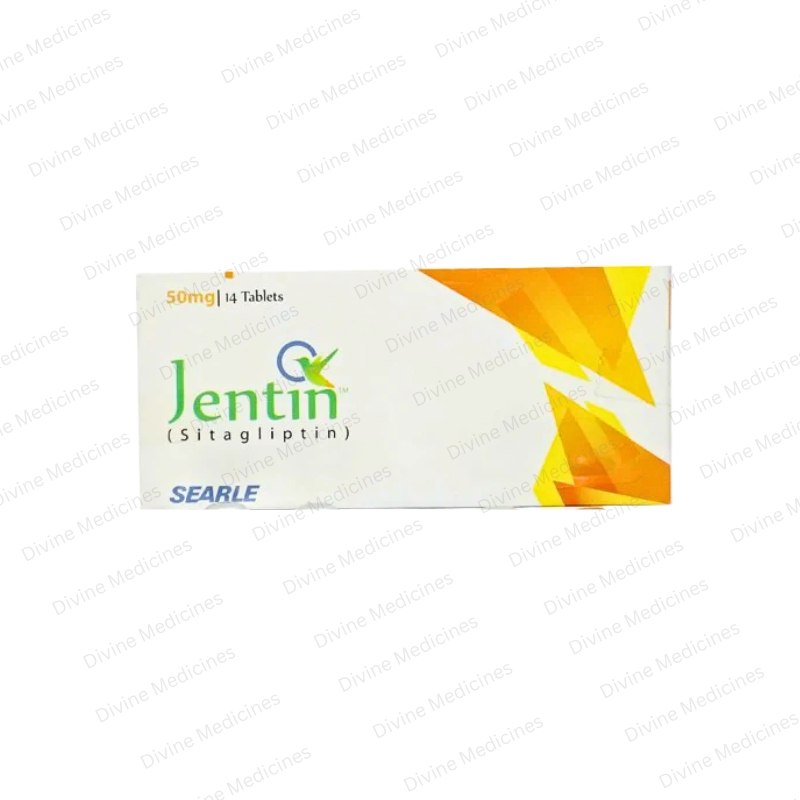
Jentin 50mg Tablets contain Sitagliptin and are made by Searle Company Limited. Sitagliptin increases the body’s own incretin hormones, which raise insulin release and lower sugar production after meals. It is weight-neutral and has a low risk of low blood sugar on its own. You can order it online from Divine Medicines with home delivery across Lahore.
Quick Facts
- Brand: Jentin
- Formula (generic): Sitagliptin
- Manufacturer: Searle Company Limited
- Drug class: Antidiabetic – DPP-4 inhibitor (gliptin)
- Dosage form: Oral tablet
- Pack size: 2 strips of 7 tablets
Ingredients
Each tablet contains Sitagliptin 50 mg.
Drug Class
Antidiabetic – DPP-4 inhibitor (gliptin).
Dosage Form & Pack Size
Oral tablet. Available as a full pack (2 strips of 7 tablets) or as a single strip of 7 tablets.
Uses
Jentin 50mg is used for:
- Type 2 diabetes, alone or with other diabetes medicines, alongside diet and exercise
Dosage
The usual dose is 100 mg once daily. People with moderate kidney disease take 50 mg, and severe kidney disease 25 mg once daily.
How to Use
Swallow the tablet with water, with or without food.
Missed Dose
Take the missed dose when you remember. If the next dose is due soon, skip the missed one. Do not take a double dose.
Overdose
If you take too much, contact your doctor or go to the nearest hospital emergency department straight away.
When Not to Use
- Allergy to sitagliptin
- Type 1 diabetes or diabetic ketoacidosis
Side Effects
Common side effects may include:
- Headache
- Upper respiratory infection or sore throat
- Joint pain
- Low blood sugar when combined with sulfonylureas or insulin
Seek urgent help for severe stomach pain spreading to the back (possible pancreatitis), blistering skin, or swelling of the face or throat.
Precautions & Warnings
- Stop and see a doctor if you develop severe, persistent stomach pain
- Your doctor will check kidney function
Pregnancy & Breastfeeding
Not recommended during pregnancy or breastfeeding; insulin is usually preferred. Speak to your doctor if you are pregnant or planning pregnancy.
Drug Interactions
- Sulfonylureas and insulin increase the risk of low blood sugar
Storage Instructions
Store below 30°C in a dry place, away from direct sunlight and moisture. Keep in the original pack and out of reach of children.
FAQs
What is the Jentin 50mg price in Pakistan?
Current prices for a full pack and for a single strip are shown at the top of this page. Order online from Divine Medicines for delivery in Lahore.
Can I buy a single strip of Jentin 50mg?
Yes. You can choose either a full pack or a single strip.
What is the formula of Jentin 50mg?
The formula (generic name) of Jentin 50mg is Sitagliptin.
Who manufactures Jentin 50mg?
Jentin 50mg is manufactured by Searle Company Limited and is available at Divine Medicines with delivery across Lahore.
Does Jentin 50mg cause low blood sugar?
On its own the risk is low; it is higher when combined with sulfonylureas or insulin.
When should I take Jentin 50mg?
At the same time each day, with or without food.
Does Jentin 50mg cause weight gain?
Gliptins are generally weight-neutral.
Disclaimer
Always use this medicine strictly according to your doctor’s instructions and prescribed dosage.
 Sale!
Sale!
 Sale!
Sale!
 Sale!
Sale!
 Sale!
Sale!
 Sale!
Sale!
 Sale!
Sale!
 Sale!
Sale!
 Sale!
Sale!


 Your cart is empty


Reviews
There are no reviews yet.