Description
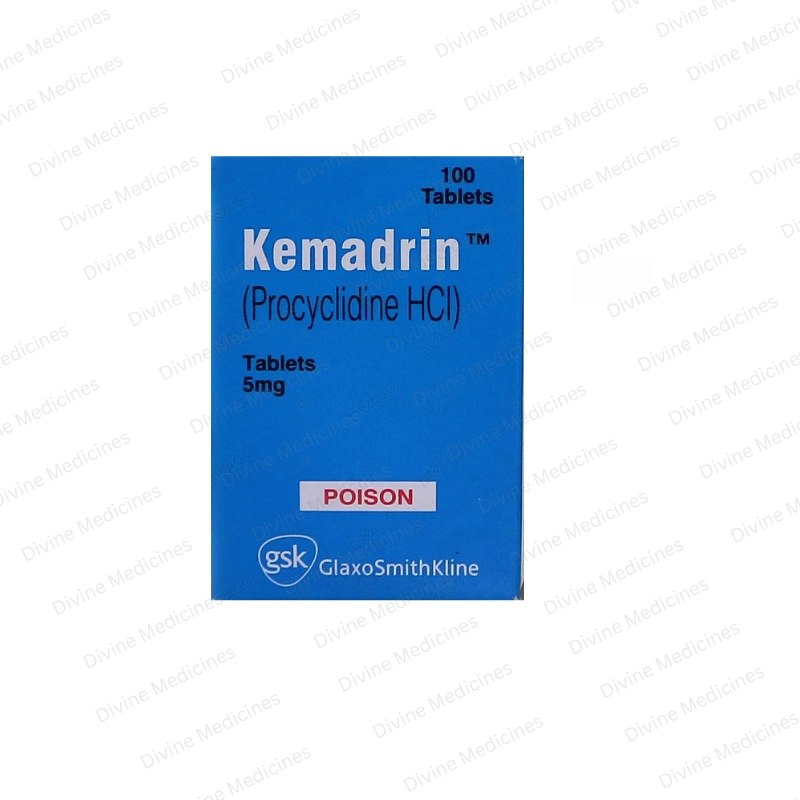
Kemadrin 5mg Tablets contain Procyclidine Hydrochloride and are made by GlaxoSmithKline. Procyclidine blocks acetylcholine in the brain. It eases stiffness and tremor in Parkinson’s disease and the movement side effects caused by antipsychotic medicines. You can order it online from Divine Medicines with home delivery across Lahore.
Quick Facts
- Brand: Kemadrin
- Formula (generic): Procyclidine Hydrochloride
- Manufacturer: GlaxoSmithKline
- Drug class: Anticholinergic – antiparkinsonian
- Dosage form: Oral tablet
- Pack size: 100 tablets
Ingredients
Each tablet contains Procyclidine Hydrochloride 5 mg.
Drug Class
Anticholinergic – antiparkinsonian.
Dosage Form & Pack Size
Oral tablet. Pack of 100 tablets.
Uses
Kemadrin 5mg is used for:
- Movement side effects of antipsychotic medicines (extrapyramidal symptoms)
- Parkinson’s disease, especially stiffness and tremor
Dosage
Adults usually start with 2.5 mg three times daily, increased by 2.5–5 mg daily every few days; the usual maintenance dose is 10–30 mg daily in divided doses.
How to Use
Swallow the tablet with water after meals.
Missed Dose
Take the missed dose when you remember. If the next dose is due soon, skip the missed one. Do not take a double dose.
Overdose
An overdose can cause confusion, agitation, hallucinations, fast heartbeat and fever. Get emergency help.
When Not to Use
- Narrow-angle glaucoma
- Bowel obstruction
- Tardive dyskinesia (uncontrolled movements)
- Allergy to procyclidine
Side Effects
Common side effects may include:
- Dry mouth
- Blurred vision
- Constipation
- Difficulty passing urine
- Dizziness
Seek help for confusion, hallucinations or eye pain.
Precautions & Warnings
- Can be misused for its stimulating effects
- Older people are more prone to confusion
- Avoid overheating in hot weather
Pregnancy & Breastfeeding
Use in pregnancy or breastfeeding only if your doctor advises.
Drug Interactions
- Other anticholinergic medicines add to side effects
- Alcohol increases drowsiness
Storage Instructions
Store below 30°C in a dry place, away from direct sunlight and moisture. Keep in the original pack and out of reach of children.
FAQs
What is the Kemadrin 5mg price in Pakistan?
Current prices are shown at the top of this page. Order online from Divine Medicines for delivery in Lahore.
What is the formula of Kemadrin 5mg?
The formula (generic name) of Kemadrin 5mg is Procyclidine Hydrochloride.
Who manufactures Kemadrin 5mg?
Kemadrin 5mg is manufactured by GlaxoSmithKline and is available at Divine Medicines with delivery across Lahore.
Why is Kemadrin 5mg given with antipsychotics?
To ease stiffness, tremor and restlessness caused by them.
Can Kemadrin 5mg cause a dry mouth?
Yes, this is common.
Should Kemadrin 5mg be stopped suddenly?
No, reduce it gradually as advised.
Is Kemadrin 5mg used for Parkinson’s?
Yes, mainly for tremor and stiffness.
Disclaimer
Always use this medicine strictly according to your doctor’s instructions and prescribed dosage.
 Sale!
Sale!
 Sale!
Sale!
 Sale!
Sale!
 Sale!
Sale!
 Sale!
Sale!
 Sale!
Sale!
 Sale!
Sale!
 Sale!
Sale!


 Your cart is empty


Reviews
There are no reviews yet.