Description
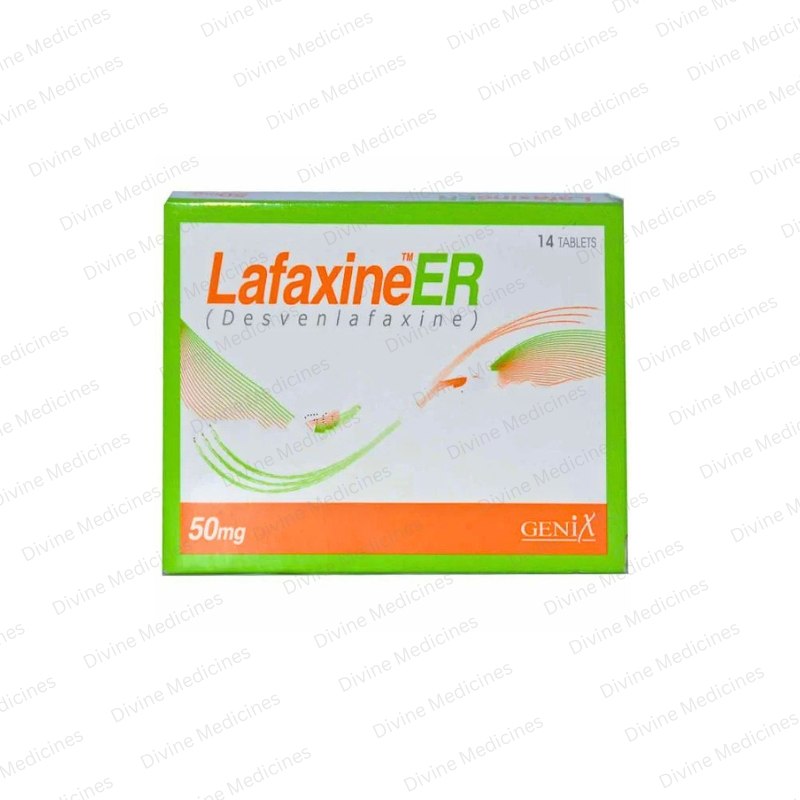
Lafaxine Er 50mg Tablets contain Desvenlafaxine and are made by Genix Pharma. Desvenlafaxine is the active form of venlafaxine. It increases the levels of serotonin and noradrenaline, two brain chemicals that help regulate mood. The extended-release (ER) tablet releases the medicine slowly over the day. You can order it online from Divine Medicines with home delivery across Lahore.
Quick Facts
- Brand: Lafaxine Er
- Formula (generic): Desvenlafaxine
- Manufacturer: Genix Pharma
- Drug class: Antidepressant – serotonin and noradrenaline reuptake inhibitor (SNRI)
- Dosage form: Extended-release tablet
- Pack size: 14 tablets
Ingredients
Each extended-release tablet contains Desvenlafaxine (as succinate) 50 mg.
Drug Class
Antidepressant – serotonin and noradrenaline reuptake inhibitor (SNRI).
Dosage Form & Pack Size
Extended-release tablet. Pack of 14 tablets.
Uses
Lafaxine Er 50mg is used for:
- Major depressive disorder (depression) in adults
Dosage
The usual dose is 50 mg once daily. Some people may need up to 100 mg daily, but higher doses rarely add benefit. Lower doses are used in kidney disease.
How to Use
Swallow the extended-release tablet whole with water once daily, at about the same time, with or without food. Do not crush, chew or split it. An empty tablet shell may appear in the stool – this is normal.
Missed Dose
Take the missed dose when you remember. If the next dose is due soon, skip the missed one. Do not take a double dose.
Overdose
An overdose may cause drowsiness, fast heartbeat, high blood pressure, fits and vomiting. Seek emergency help.
When Not to Use
- Taking MAOIs (or within 14 days of stopping them; 7 days after stopping desvenlafaxine before starting an MAOI)
- Allergy to desvenlafaxine or venlafaxine
Side Effects
Common side effects may include:
- Nausea
- Dizziness
- Sweating
- Trouble sleeping or drowsiness
- Dry mouth
- Constipation
- Sexual problems
Seek urgent help for thoughts of self-harm, severe agitation, high fever with stiffness, or unusual bleeding.
Precautions & Warnings
- Do not stop suddenly – your doctor will reduce the dose slowly to avoid withdrawal symptoms
- Young adults may have more suicidal thoughts at the start – watch closely
- Your blood pressure may be checked
- Avoid alcohol
Pregnancy & Breastfeeding
Use in pregnancy or breastfeeding only if your doctor decides the benefits outweigh the risks.
Drug Interactions
- MAOIs, linezolid, tramadol, triptans and St John’s wort: risk of serotonin syndrome
- Aspirin, NSAIDs and blood thinners: increased bleeding risk
- Alcohol: avoid
Storage Instructions
Store below 30°C in a dry place, away from direct sunlight and moisture. Keep in the original pack and out of reach of children.
FAQs
What is the Lafaxine Er 50mg price in Pakistan?
Current prices are shown at the top of this page. Order online from Divine Medicines for delivery in Lahore.
What is the formula of Lafaxine Er 50mg?
The formula (generic name) of Lafaxine Er 50mg is Desvenlafaxine.
Who manufactures Lafaxine Er 50mg?
Lafaxine Er 50mg is manufactured by Genix Pharma and is available at Divine Medicines with delivery across Lahore.
How long does Lafaxine Er 50mg take to work?
Usually 2–4 weeks, with full effect after several weeks.
Can I stop Lafaxine Er 50mg suddenly?
No – the dose should be reduced gradually.
Why is there a tablet in my stool?
It is the empty shell of the ER tablet and is harmless.
Is Lafaxine Er 50mg the same as venlafaxine?
It is the active form of venlafaxine.
Disclaimer
Always use this medicine strictly according to your doctor’s instructions and prescribed dosage.
 Sale!
Sale!
 Sale!
Sale!
 Sale!
Sale!
 Sale!
Sale!
 Sale!
Sale!
 Sale!
Sale!
 Sale!
Sale!
 Sale!
Sale!


 Your cart is empty


Reviews
There are no reviews yet.