Description
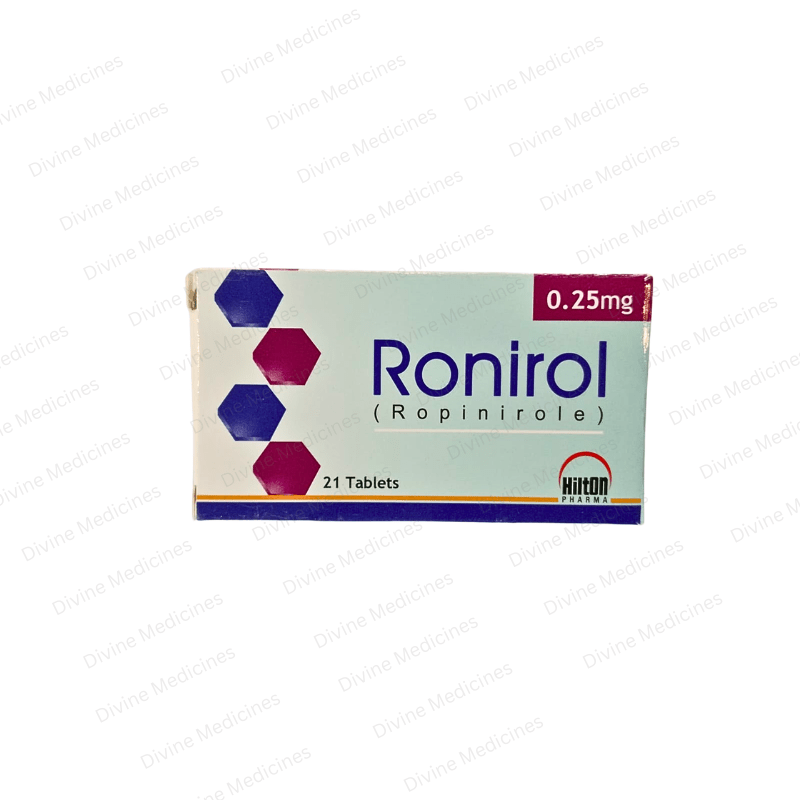
Ronirol 0.25mg Tablets contain Ropinirole and are made by Hilton Pharma. Ropinirole acts like dopamine in the brain. It eases stiffness, slowness and tremor in Parkinson’s disease and calms the urge to move the legs in restless legs syndrome. You can order it online from Divine Medicines with home delivery across Lahore.
Quick Facts
- Brand: Ronirol
- Formula (generic): Ropinirole
- Manufacturer: Hilton Pharma
- Drug class: Dopamine agonist
- Dosage form: Oral tablet
- Pack size: 3 strips of 7 tablets
Ingredients
Each tablet contains Ropinirole 0.25 mg.
Drug Class
Dopamine agonist.
Dosage Form & Pack Size
Oral tablet. Available as a full pack (3 strips of 7 tablets) or as a single strip of 7 tablets.
Uses
Ronirol 0.25mg is used for:
- Parkinson’s disease, alone or with levodopa
- Moderate to severe restless legs syndrome
Dosage
Restless legs: start at 0.25 mg once daily 1–3 hours before bedtime, increased gradually to usually 2 mg daily (maximum 4 mg). Parkinson’s: start at 0.25 mg three times daily and increase weekly; the usual range is 3–9 mg daily, maximum 24 mg.
How to Use
Swallow the tablet with water, preferably with food to reduce nausea.
Missed Dose
Take the missed dose when you remember. If the next dose is due soon, skip the missed one. Do not take a double dose.
Overdose
If you take too much, contact your doctor or go to the nearest hospital emergency department straight away.
When Not to Use
- Severe kidney disease without dialysis
- Liver disease
- Allergy to ropinirole
Side Effects
Common side effects may include:
- Nausea
- Drowsiness
- Dizziness
- Swelling of the legs
- Fainting when standing
Seek medical help for sudden sleep episodes, hallucinations, or strong urges such as gambling, binge eating or compulsive shopping.
Precautions & Warnings
- Can cause sudden sleep episodes; do not drive if affected
- Report any unusual urges or impulsive behaviour
- Do not stop suddenly
Pregnancy & Breastfeeding
Not recommended during pregnancy or breastfeeding.
Drug Interactions
- Ciprofloxacin and fluvoxamine raise ropinirole levels
- Antipsychotics and metoclopramide can reduce its effect
- Smoking lowers its levels
- Alcohol increases drowsiness
Storage Instructions
Store below 30°C in a dry place, away from direct sunlight and moisture. Keep in the original pack and out of reach of children.
FAQs
What is the Ronirol 0.25mg price in Pakistan?
Current prices for a full pack and for a single strip are shown at the top of this page. Order online from Divine Medicines for delivery in Lahore.
Can I buy a single strip of Ronirol 0.25mg?
Yes. You can choose either a full pack or a single strip.
What is the formula of Ronirol 0.25mg?
The formula (generic name) of Ronirol 0.25mg is Ropinirole.
Who manufactures Ronirol 0.25mg?
Ronirol 0.25mg is manufactured by Hilton Pharma and is available at Divine Medicines with delivery across Lahore.
When should I take Ronirol 0.25mg for restless legs?
1–3 hours before bedtime.
Can Ronirol 0.25mg cause sleepiness?
Yes, including sudden sleep episodes.
Should Ronirol 0.25mg be taken with food?
Yes, it reduces nausea.
Disclaimer
Always use this medicine strictly according to your doctor’s instructions and prescribed dosage.
 Sale!
Sale!
 Sale!
Sale!
 Sale!
Sale!
 Sale!
Sale!
 Sale!
Sale!
 Sale!
Sale!
 Sale!
Sale!
 Sale!
Sale!


 Your cart is empty


Reviews
There are no reviews yet.