Description
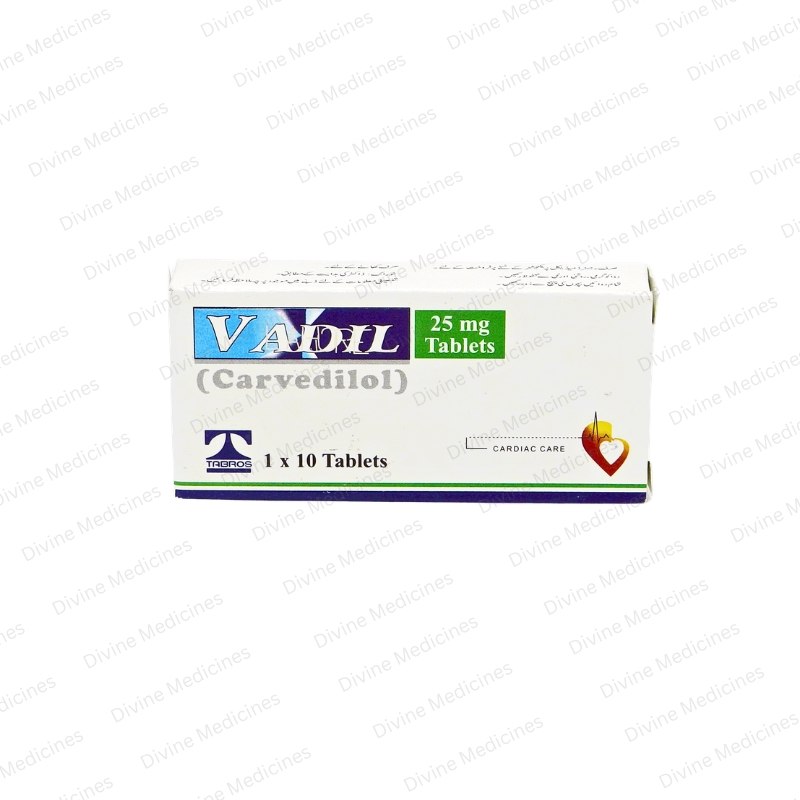
Vadil 25mg Tablets contain Carvedilol and are made by Tabros Pharma. Carvedilol slows the heart rate and relaxes blood vessels. It lowers blood pressure and helps a weakened heart pump more efficiently, and it improves survival in heart failure. You can order it online from Divine Medicines with home delivery across Lahore.
Quick Facts
- Brand: Vadil
- Formula (generic): Carvedilol
- Manufacturer: Tabros Pharma
- Drug class: Beta blocker with alpha-blocking action
- Dosage form: Oral tablet
- Pack size: 10 tablets
Ingredients
Each tablet contains Carvedilol 25 mg.
Drug Class
Beta blocker with alpha-blocking action.
Dosage Form & Pack Size
Oral tablet. Pack of 10 tablets.
Uses
Vadil 25mg is used for:
- Chronic heart failure, alongside other treatment
- High blood pressure (hypertension)
- Stable angina
- Weak heart function after a heart attack
Dosage
Heart failure: start at 3.125 mg twice daily and double every 2 weeks as tolerated up to 25 mg twice daily (50 mg twice daily if over 85 kg). Blood pressure: 12.5 mg once daily for 2 days, then 25 mg once daily, up to 50 mg daily.
How to Use
Swallow the tablet with water, with food to reduce dizziness. Do not stop suddenly.
Missed Dose
Take the missed dose when you remember. If the next dose is due soon, skip the missed one. Do not take a double dose.
Overdose
If you take too much, contact your doctor or go to the nearest hospital emergency department straight away.
When Not to Use
- Allergy to carvedilol
- Severe liver problems
- Very slow heart rate or certain heart block
- Severe asthma
- Untreated phaeochromocytoma
- Acute or worsening heart failure needing IV medicine
Side Effects
Common side effects may include:
- Headache
- Dizziness
- Tiredness
- Tingling in hands or feet
- Slow heart rate
- Cold hands or feet
Seek urgent help for fainting, a very slow heartbeat, breathing difficulty or swelling of the legs.
Precautions & Warnings
- Do not stop suddenly; this can cause chest pain or a rise in heart rate
- It can hide signs of low blood sugar in people with diabetes
- Tell your doctor if you have asthma or circulation problems
Pregnancy & Breastfeeding
Use in pregnancy only if your doctor decides it is clearly needed. Breastfeeding is not recommended.
Drug Interactions
- Verapamil and diltiazem can cause a very slow heart rate
- Fluoxetine and paroxetine can raise carvedilol levels
- Other blood pressure medicines add to its effect
- Insulin and diabetes tablets: signs of low sugar may be masked
Storage Instructions
Store below 30°C in a dry place, away from direct sunlight and moisture. Keep in the original pack and out of reach of children.
FAQs
What is the Vadil 25mg price in Pakistan?
Current prices are shown at the top of this page. Order online from Divine Medicines for delivery in Lahore.
What is the formula of Vadil 25mg?
The formula (generic name) of Vadil 25mg is Carvedilol.
Who manufactures Vadil 25mg?
Vadil 25mg is manufactured by Tabros Pharma and is available at Divine Medicines with delivery across Lahore.
Why is Vadil 25mg started at a low dose?
To reduce dizziness and allow the heart to adjust; the dose is increased slowly.
Should Vadil 25mg be taken with food?
Yes.
Can I stop Vadil 25mg suddenly?
No.
Disclaimer
Always use this medicine strictly according to your doctor’s instructions and prescribed dosage.
 Sale!
Sale!
 Sale!
Sale!
 Sale!
Sale!
 Sale!
Sale!
 Sale!
Sale!
 Sale!
Sale!
 Sale!
Sale!
 Sale!
Sale!


 Your cart is empty


Reviews
There are no reviews yet.