Description
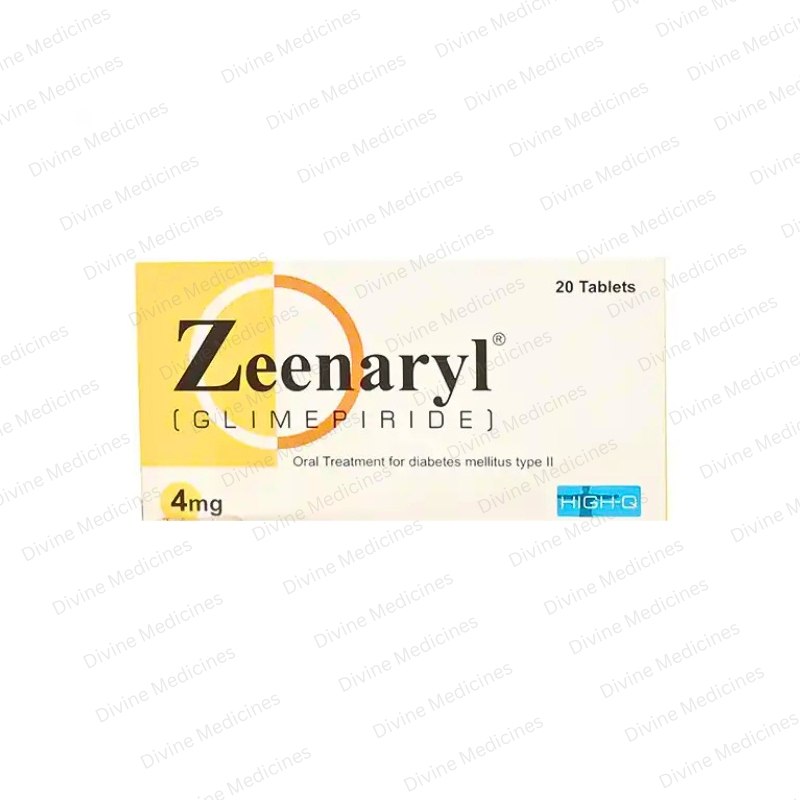
Zeenaryl 4mg Tablets contain Glimepiride and are made by High-Q International. Glimepiride lowers blood sugar by helping the pancreas release more insulin. It is used with diet and exercise in type 2 diabetes. You can order it online from Divine Medicines with home delivery across Lahore.
Quick Facts
- Brand: Zeenaryl
- Formula (generic): Glimepiride
- Manufacturer: High-Q International
- Drug class: Antidiabetic – sulfonylurea
- Dosage form: Oral tablet
- Pack size: 2 strips of 10 tablets
Ingredients
Each tablet contains Glimepiride 4 mg.
Drug Class
Antidiabetic – sulfonylurea.
Dosage Form & Pack Size
Oral tablet. Available as a full pack (2 strips of 10 tablets) or as a single strip of 10 tablets.
Uses
Zeenaryl 4mg is used for:
- Type 2 diabetes, alone or with metformin or other diabetes medicines, alongside diet and exercise
Dosage
The usual starting dose is 1 mg once daily. Your doctor may increase it every 1–2 weeks to 2, 3 or 4 mg; the maximum is 6 mg daily.
How to Use
Take the tablet with breakfast or the first main meal of the day, swallowed with water. Do not skip meals.
Missed Dose
Take the missed dose when you remember. If the next dose is due soon, skip the missed one. Do not take a double dose.
Overdose
An overdose can cause dangerously low blood sugar. Take sugar or a sweet drink immediately and seek emergency help.
When Not to Use
- Type 1 diabetes or diabetic ketoacidosis
- Severe kidney or liver disease
- Allergy to glimepiride or other sulfonylureas or sulfonamides
- Pregnancy or breastfeeding
Side Effects
Common side effects may include:
- Low blood sugar (hypoglycaemia)
- Nausea
- Weight gain
- Dizziness
- Temporary vision changes at the start
Seek urgent help for severe low blood sugar (confusion, fits, fainting) or a serious skin reaction.
Precautions & Warnings
- Learn the signs of low blood sugar: shaking, sweating, fast heartbeat, hunger, confusion; take sugar or juice straight away
- Eat regular meals and do not skip meals
- Your doctor will check HbA1c and kidney function regularly
- Alcohol increases the risk of low blood sugar
Pregnancy & Breastfeeding
Not recommended during pregnancy or breastfeeding; insulin is usually preferred. Speak to your doctor if you are pregnant or planning pregnancy.
Drug Interactions
- Insulin and other diabetes medicines increase low-sugar risk
- Beta blockers can hide low-sugar symptoms
- Fluconazole, clarithromycin and some painkillers can increase its effect
- Steroids and thiazide diuretics can raise blood sugar
Storage Instructions
Store below 30°C in a dry place, away from direct sunlight and moisture. Keep in the original pack and out of reach of children.
FAQs
What is the Zeenaryl 4mg price in Pakistan?
Current prices for a full pack and for a single strip are shown at the top of this page. Order online from Divine Medicines for delivery in Lahore.
Can I buy a single strip of Zeenaryl 4mg?
Yes. You can choose either a full pack or a single strip.
What is the formula of Zeenaryl 4mg?
The formula (generic name) of Zeenaryl 4mg is Glimepiride.
Who manufactures Zeenaryl 4mg?
Zeenaryl 4mg is manufactured by High-Q International and is available at Divine Medicines with delivery across Lahore.
When should I take Zeenaryl 4mg?
With breakfast or your first main meal of the day.
What should I do if my sugar goes low on Zeenaryl 4mg?
Take glucose, sugar or a sweet drink straight away, then eat a snack.
Can I take Zeenaryl 4mg with metformin?
Yes. They are commonly used together.
Disclaimer
Always use this medicine strictly according to your doctor’s instructions and prescribed dosage.
 Sale!
Sale!
 Sale!
Sale!
 Sale!
Sale!
 Sale!
Sale!
 Sale!
Sale!
 Sale!
Sale!
 Sale!
Sale!
 Sale!
Sale!


 Your cart is empty


Reviews
There are no reviews yet.