Description
Description
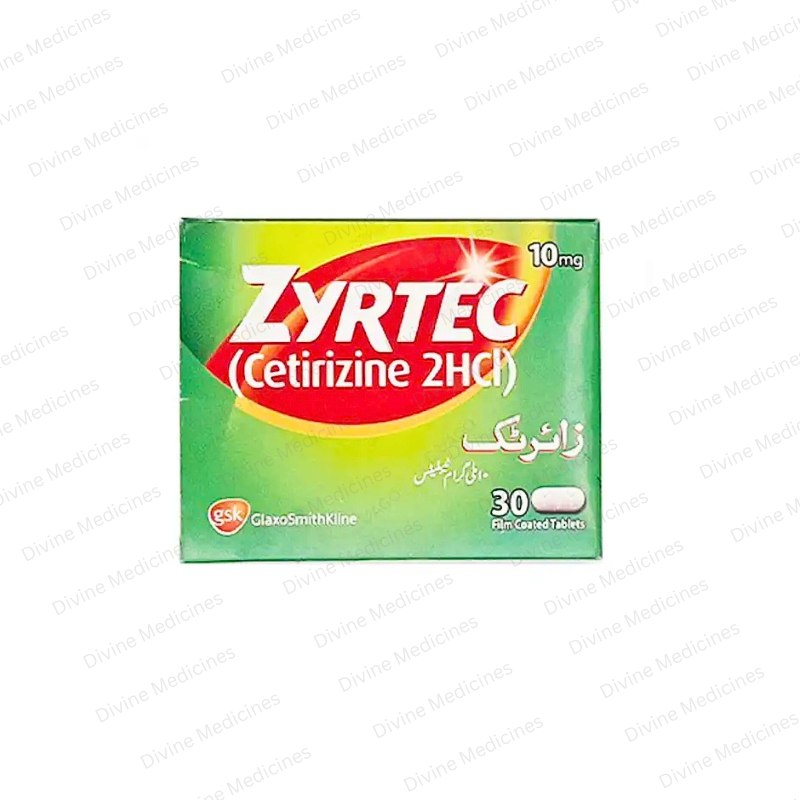
Zyrtec (10mg) is a popular oral antihistamine tablet containing Cetirizine, used to relieve the everyday symptoms of allergies such as sneezing, runny nose, itchy or watery eyes, and skin irritation. As a second-generation antihistamine, Cetirizine works by blocking the action of histamine, a natural substance the body releases during an allergic reaction, which in turn reduces the intensity of allergy symptoms without causing the significant drowsiness associated with older antihistamines. Zyrtec is commonly used for seasonal allergies, year-round allergic rhinitis, and hives, making it a practical option for people who need reliable relief from allergy symptoms on a regular or as-needed basis. This pack contains 30 tablets, suitable for extended use throughout an allergy season or as an ongoing option for chronic allergy symptoms as advised by a doctor.
Ingredients
Each Zyrtec tablet contains Cetirizine Dihydrochloride as its active ingredient, present at a strength of 10mg per tablet. Cetirizine selectively targets histamine receptors in the body, preventing histamine from triggering the chain of reactions responsible for common allergy symptoms. The tablet also contains standard pharmaceutical excipients used to bind and form the tablet, ensuring consistency in shape, stability, and dosing accuracy. These additional ingredients do not contribute to the antihistamine effect but are necessary for reliable tablet formulation.
Dosage Form
Zyrtec is available as an oral film-coated tablet, with each tablet containing 10mg of Cetirizine. This oral form is designed for straightforward once-daily use, offering a convenient way to manage allergy symptoms without the need for multiple daily doses in most cases.
Uses
Zyrtec 10mg is commonly used to relieve symptoms associated with seasonal allergic rhinitis, such as hay fever, as well as perennial allergic rhinitis that occurs year-round due to indoor allergens like dust or pet dander. It is also used to manage hives and other skin allergy symptoms, including itching and rash. Beyond these common uses, it may help relieve allergy-related symptoms such as a runny nose, sneezing, and itchy or watery eyes, making it a versatile option for people affected by various types of allergic triggers.
How To Use
Zyrtec tablets are generally taken once daily, with or without food, and should be swallowed with a glass of water. The recommended dose for most adults and children above a certain age is one 10mg tablet daily, though a lower dose may be advised for children, elderly patients, or those with kidney impairment, so it is important to follow the dosing guidance provided by a doctor or pharmacist. The daily dose should not be exceeded, as taking more than recommended does not improve allergy relief and may increase the risk of side effects. If a dose is missed, it should be taken as soon as remembered, unless it is close to the time for the next dose, in which case the missed dose should be skipped rather than doubled.
Side Effects
Zyrtec is generally well tolerated, and being a second-generation antihistamine, it causes drowsiness less often than older allergy medicines, though some individuals may still experience mild sleepiness. Other commonly reported effects include headache, dry mouth, dizziness, and mild digestive discomfort. In rare cases, some individuals may experience increased restlessness or agitation, particularly at higher doses. Serious allergic reactions to Cetirizine itself are uncommon but possible, and symptoms such as swelling of the face or throat, severe rash, or difficulty breathing require immediate medical attention.
Pregnancy & Breastfeeding
Pregnant women should only use Zyrtec if their doctor determines it is clearly necessary, since the safety of Cetirizine during pregnancy has not been completely established and safer alternatives may be considered first. Breastfeeding mothers should also consult their doctor before use, as Cetirizine can pass into breast milk, and its use during this period should be guided by a healthcare professional based on individual circumstances.
Storage Instructions
Store Zyrtec tablets at room temperature, away from excessive heat, moisture, and direct light. Keep the tablets in their original packaging until they are needed, and store them safely out of the reach of children. Do not use the tablets after the expiry date printed on the pack, and dispose of any unused or expired medicine appropriately rather than through regular household waste.
FAQS
Does Zyrtec cause drowsiness like older allergy medicines?
Zyrtec causes drowsiness less frequently than first-generation antihistamines, though some individuals may still feel mildly sleepy, especially when starting treatment.
Can Zyrtec be taken every day during allergy season?
Yes, it is commonly used daily during allergy season, but the recommended daily dose should not be exceeded, and prolonged use should be discussed with a doctor if symptoms persist.
Is Zyrtec suitable for children?
A lower dose is often used for children, and the exact dosage should be determined by a doctor based on the child’s age and weight.
What should I do if allergy symptoms don’t improve with Zyrtec?
If symptoms persist despite regular use, consult a doctor, as a different medicine or additional evaluation of the allergy trigger may be needed.
Disclaimer
Always use this medicine strictly according to your doctor’s instructions and prescribed dosage.


Reviews
There are no reviews yet.