Description
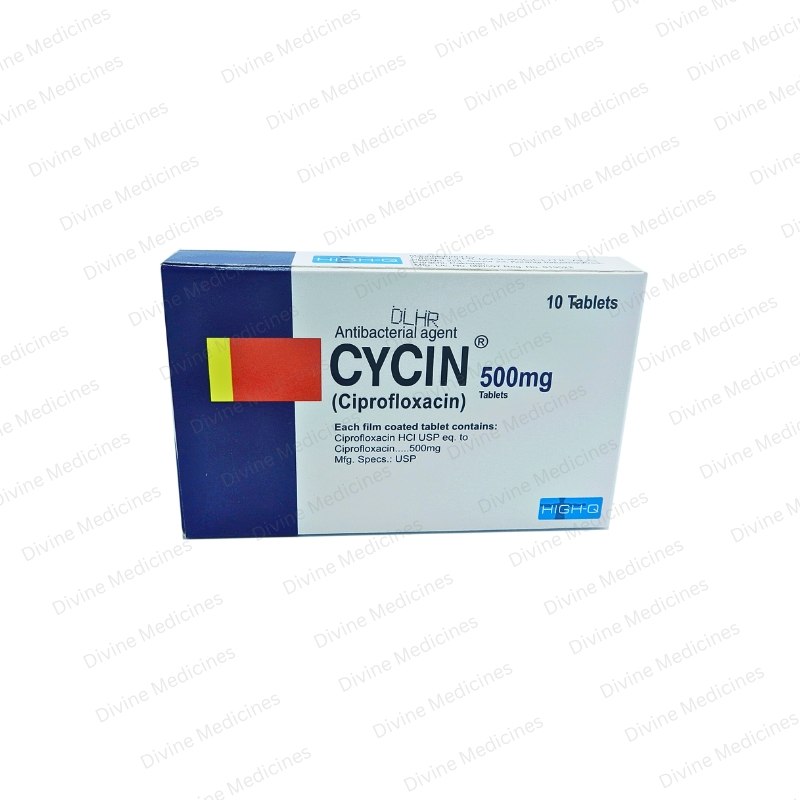
Cycin 500mg Tablets contain Ciprofloxacin and are made by High-Q International. Ciprofloxacin kills bacteria by blocking enzymes they need to copy their DNA. It works against many urinary, gut, bone and chest infections. You can order it online from Divine Medicines with home delivery across Lahore.
Quick Facts
- Brand: Cycin
- Formula (generic): Ciprofloxacin
- Manufacturer: High-Q International
- Drug class: Antibiotic – fluoroquinolone
- Dosage form: Oral tablet
- Pack size: 10 tablets
Ingredients
Each tablet contains Ciprofloxacin 500 mg.
Drug Class
Antibiotic – fluoroquinolone.
Dosage Form & Pack Size
Oral tablet. Pack of 10 tablets.
Uses
Cycin 500mg is used for:
- Urinary tract and kidney infections
- Typhoid and other serious gut infections
- Bone, joint and skin infections
- Certain chest infections
- Gonorrhoea
Dosage
Adults usually take 250–750 mg twice daily for 3–14 days depending on the infection; simple urinary infections often need 250 mg twice daily for 3 days. Use in children is limited to specific infections under specialist care.
How to Use
Swallow the tablet whole with water, with or without food. Do not take it with dairy-only drinks or calcium-fortified juice. Drink plenty of fluids.
Missed Dose
Take the missed dose as soon as you remember. If the next dose is due soon, skip the missed one. Do not double the dose.
Overdose
If you take too much, contact your doctor or go to the nearest hospital emergency department straight away.
When Not to Use
- Allergy to any quinolone antibiotic
- Previous tendon problems with a quinolone
- Children and growing teenagers, unless a specialist decides
- Pregnancy or breastfeeding
- Myasthenia gravis
- Taking tizanidine
Side Effects
Common side effects may include:
- Nausea
- Diarrhoea
- Headache
- Dizziness
- Sensitivity to sunlight
Stop and seek urgent help for tendon pain or swelling, tingling or numbness, palpitations, severe diarrhoea, or mood changes.
Precautions & Warnings
- Complete the full course even if you feel better, to stop the infection coming back and reduce resistance
- Antibiotics do not work for colds or flu caused by viruses
- Seek medical help for severe or bloody diarrhoea during or after the course
- Rarely, it can cause tendon inflammation or rupture; stop and rest the limb if you feel tendon pain, especially in the heel
- Can cause nerve damage (tingling, numbness); report these symptoms
- Avoid strong sunlight and sunbeds; it can increase sensitivity
Pregnancy & Breastfeeding
Must not be used during pregnancy or breastfeeding.
Drug Interactions
- Antacids, iron, zinc, calcium and dairy-only drinks reduce absorption; take the antibiotic 2 hours before or 6 hours after
- Steroids increase the risk of tendon damage
- Warfarin effect may increase
- Medicines that affect heart rhythm add to QT risk
- Tizanidine must not be combined
- Theophylline levels can rise
Storage Instructions
Store below 30°C in a dry place, away from direct sunlight and moisture. Keep in the original pack and out of reach of children.
FAQs
What is the Cycin 500mg price in Pakistan?
Current prices are shown at the top of this page. Order online from Divine Medicines for delivery in Lahore.
What is the formula of Cycin 500mg?
The formula (generic name) of Cycin 500mg is Ciprofloxacin.
Who manufactures Cycin 500mg?
Cycin 500mg is manufactured by High-Q International and is available at Divine Medicines with delivery across Lahore.
Can I take Cycin 500mg with milk?
Avoid taking it with milk or yoghurt alone; take it 2 hours before or 6 hours after dairy.
Why should I avoid the sun on Cycin 500mg?
It can make your skin more sensitive to sunlight.
Can I stop Cycin 500mg early?
No. Finish the full course.
Disclaimer
Always use this medicine strictly according to your doctor’s instructions and prescribed dosage.
 Sale!
Sale!
 Sale!
Sale!
 Sale!
Sale!
 Sale!
Sale!
 Sale!
Sale!
 Sale!
Sale!
 Sale!
Sale!
 Sale!
Sale!


 Your cart is empty


Reviews
There are no reviews yet.