Description
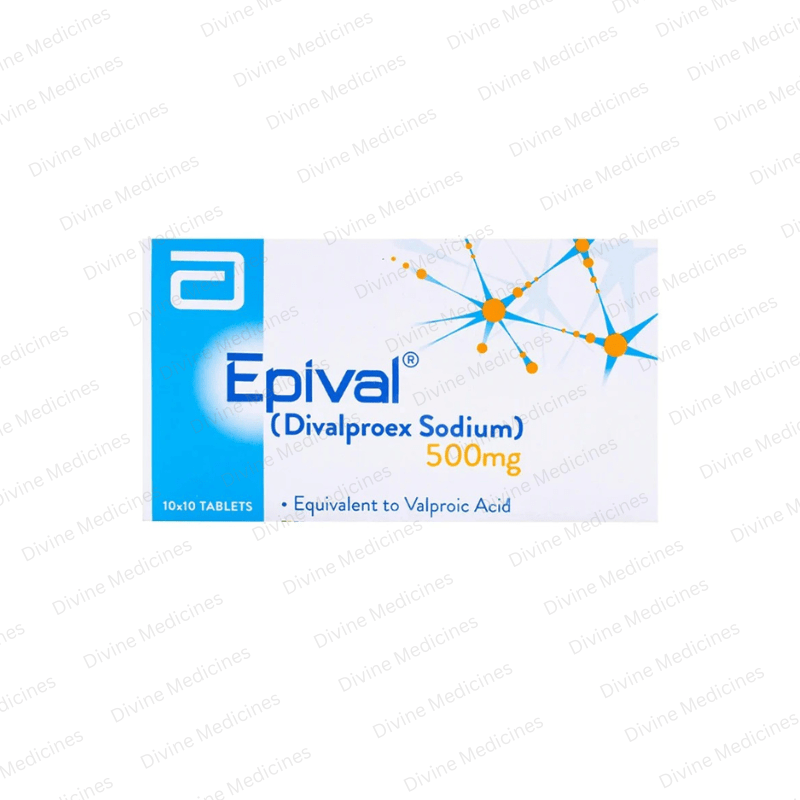
Epival 500mg Tablets contain Divalproex Sodium (Valproate) and are made by Abbott Laboratories. Divalproex releases valproic acid, which increases the calming brain chemical GABA and steadies electrical activity. It is used for many types of seizures, for bipolar mania and to reduce migraine frequency. You can order it online from Divine Medicines with home delivery across Lahore.
Quick Facts
- Brand: Epival
- Formula (generic): Divalproex Sodium (Valproate)
- Manufacturer: Abbott Laboratories
- Drug class: Antiepileptic and mood stabiliser
- Dosage form: Oral tablet
- Pack size: 10 strips of 10 tablets
Ingredients
Each enteric-coated tablet contains Divalproex sodium equivalent to 500 mg valproic acid.
Drug Class
Antiepileptic and mood stabiliser.
Dosage Form & Pack Size
Oral tablet. Available as a full pack (10 strips of 10 tablets) or as a single strip of 10 tablets.
Uses
Epival 500mg is used for:
- Epilepsy – many seizure types, including absence and generalised seizures
- Manic episodes of bipolar disorder
- Reducing how often migraine attacks occur in adults
Dosage
The dose depends on the condition and body weight; adults commonly start at 10–15 mg/kg daily, increased gradually. Blood levels may be checked.
How to Use
Swallow the tablet whole with water, with or after food; do not crush or chew it. Take it at the same times each day and do not stop suddenly.
Missed Dose
Take the missed dose when you remember. If the next dose is due soon, skip the missed one. Do not take a double dose.
Overdose
An overdose can cause severe drowsiness, coma and breathing problems. Get emergency help immediately.
When Not to Use
- Liver disease or a family history of serious liver disease
- Mitochondrial disorders (e.g. POLG mutations)
- Urea cycle disorders
- Pregnancy (unless no alternative), and women able to become pregnant without effective contraception
- Allergy to valproate
Side Effects
Common side effects may include:
- Nausea or stomach upset
- Weight gain
- Hair thinning
- Tremor
- Drowsiness
Seek urgent help for yellow skin, severe stomach pain (pancreatitis), unusual bruising, or confusion.
Precautions & Warnings
- Valproate can seriously harm an unborn baby – girls and women who can become pregnant must use effective contraception and follow their doctor’s pregnancy safety plan
- Your doctor will check liver function and blood counts
- A small number of people on antiepileptic medicines develop low mood or suicidal thoughts; contact your doctor immediately if this happens
Pregnancy & Breastfeeding
Valproate causes a high risk of birth defects and developmental problems. It must not be used in pregnancy unless there is no alternative. Speak to your doctor before planning a pregnancy; do not stop it suddenly.
Drug Interactions
- Lamotrigine levels double – lower lamotrigine doses are needed
- Carbapenem antibiotics sharply lower valproate levels
- Aspirin can increase valproate levels and bleeding
- Alcohol increases drowsiness
Storage Instructions
Store below 30°C in a dry place, away from direct sunlight and moisture. Keep in the original pack and out of reach of children.
FAQs
What is the Epival 500mg price in Pakistan?
Current prices for a full pack and for a single strip are shown at the top of this page. Order online from Divine Medicines for delivery in Lahore.
Can I buy a single strip of Epival 500mg?
Yes. You can choose either a full pack or a single strip.
What is the formula of Epival 500mg?
The formula (generic name) of Epival 500mg is Divalproex Sodium (Valproate).
Who manufactures Epival 500mg?
Epival 500mg is manufactured by Abbott Laboratories and is available at Divine Medicines with delivery across Lahore.
Can women take Epival 500mg?
Only with effective contraception and under specialist advice, because of serious risks in pregnancy.
Do I need blood tests on Epival 500mg?
Yes, for liver function and blood counts.
Can I stop Epival 500mg suddenly?
No.
Does Epival 500mg cause weight gain?
It can; diet and exercise help.
Disclaimer
Always use this medicine strictly according to your doctor’s instructions and prescribed dosage.
 Sale!
Sale!
 Sale!
Sale!
 Sale!
Sale!
 Sale!
Sale!
 Sale!
Sale!
 Sale!
Sale!
 Sale!
Sale!
 Sale!
Sale!


 Your cart is empty


Reviews
There are no reviews yet.