Description
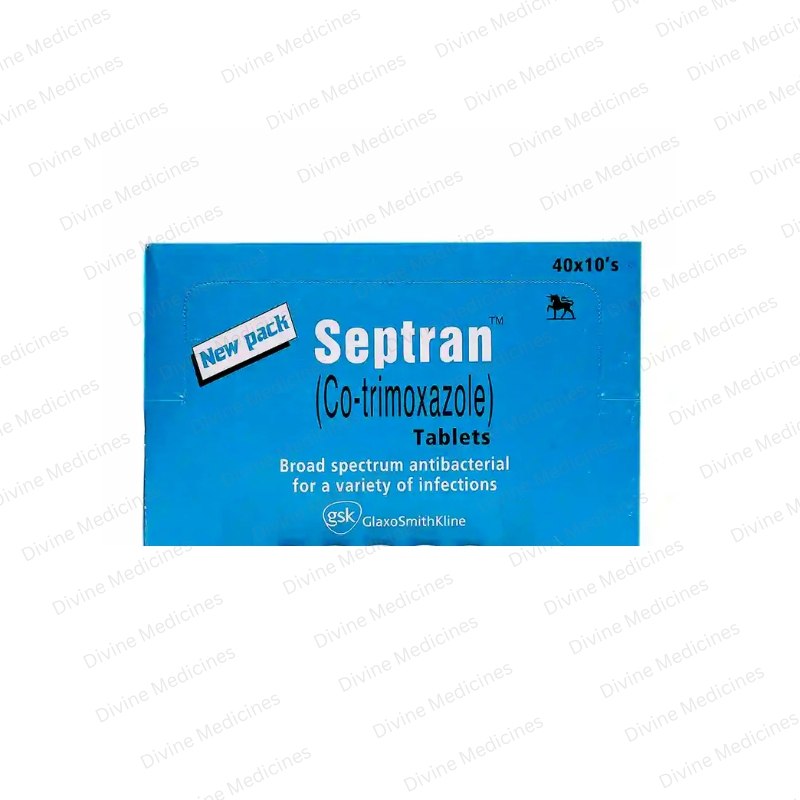
Septran 80/400mg Tablets contain Co-Trimoxazole (Trimethoprim + Sulfamethoxazole) and are made by GlaxoSmithKline. Sulfamethoxazole and trimethoprim block two steps in the way bacteria make folic acid, which they need to grow. Together they work against urinary, chest and some gut infections. You can order it online from Divine Medicines with home delivery across Lahore.
Quick Facts
- Brand: Septran
- Formula (generic): Co-Trimoxazole (Trimethoprim + Sulfamethoxazole)
- Manufacturer: GlaxoSmithKline
- Drug class: Antibiotic – sulfonamide + trimethoprim combination
- Dosage form: Oral tablet
- Pack size: 40 strips of 10 tablets
Ingredients
Each tablet contains Trimethoprim 80 mg and Sulfamethoxazole 400 mg.
Drug Class
Antibiotic – sulfonamide + trimethoprim combination.
Dosage Form & Pack Size
Oral tablet. Available as a full pack (40 strips of 10 tablets) or as a single strip of 10 tablets.
Uses
Septran 80/400mg is used for:
- Urinary tract infections
- Chest infections and flare-ups of bronchitis
- Pneumocystis pneumonia (treatment and protection in weakened immunity)
- Some gut infections, as directed
Dosage
Adults usually take 960 mg (one DS tablet or two standard tablets) twice daily for 3–14 days depending on the infection. Children’s doses depend on age and weight.
How to Use
Swallow the tablet with a full glass of water, preferably with food, and drink plenty of fluids.
Missed Dose
Take the missed dose when you remember. If the next dose is due soon, skip the missed one. Do not take a double dose.
Overdose
If you take too much, contact your doctor or go to the nearest hospital emergency department straight away.
When Not to Use
- Allergy to sulfonamides or trimethoprim
- Severe liver or kidney disease
- Babies under 6 weeks
- Folate-deficiency anaemia
- Last weeks of pregnancy
Side Effects
Common side effects may include:
- Nausea or vomiting
- Loss of appetite
- Skin rash
- Diarrhoea
- Raised potassium levels
Stop and seek urgent help for swelling of the face or throat, breathing difficulty, a blistering rash, or severe or bloody diarrhoea.
Precautions & Warnings
- Finish the full course even if you feel better
- See a doctor if severe or bloody diarrhoea develops during or after the course
- Stop at the first sign of a skin rash, as serious skin reactions can rarely occur
- Avoid strong sunlight
- Your doctor may check blood counts on longer courses
Pregnancy & Breastfeeding
Not usually used in pregnancy, especially the first trimester and last weeks. Ask your doctor before breastfeeding.
Drug Interactions
- Warfarin effect increases – INR monitoring needed
- Methotrexate toxicity may increase
- ACE inhibitors and spironolactone can raise potassium further
- Phenytoin levels may rise
Storage Instructions
Store below 30°C in a dry place, away from direct sunlight and moisture. Keep in the original pack and out of reach of children.
FAQs
What is the Septran 80/400mg price in Pakistan?
Current prices for a full pack and for a single strip are shown at the top of this page. Order online from Divine Medicines for delivery in Lahore.
Can I buy a single strip of Septran 80/400mg?
Yes. You can choose either a full pack or a single strip.
What is the formula of Septran 80/400mg?
The formula (generic name) of Septran 80/400mg is Co-Trimoxazole (Trimethoprim + Sulfamethoxazole).
Who manufactures Septran 80/400mg?
Septran 80/400mg is manufactured by GlaxoSmithKline and is available at Divine Medicines with delivery across Lahore.
Should I finish the whole course of Septran 80/400mg?
Yes, even if you feel better, to clear the infection fully.
Can I take Septran 80/400mg with food?
Yes, unless your doctor advises otherwise.
What if I get diarrhoea on Septran 80/400mg?
Mild diarrhoea is common; seek help if it is severe or bloody.
Can Septran 80/400mg be given to children?
Yes, at weight-based doses prescribed by a doctor.
Disclaimer
Always use this medicine strictly according to your doctor’s instructions and prescribed dosage.
 Sale!
Sale!
 Sale!
Sale!
 Sale!
Sale!
 Sale!
Sale!
 Sale!
Sale!
 Sale!
Sale!
 Sale!
Sale!
 Sale!
Sale!


 Your cart is empty


Reviews
There are no reviews yet.